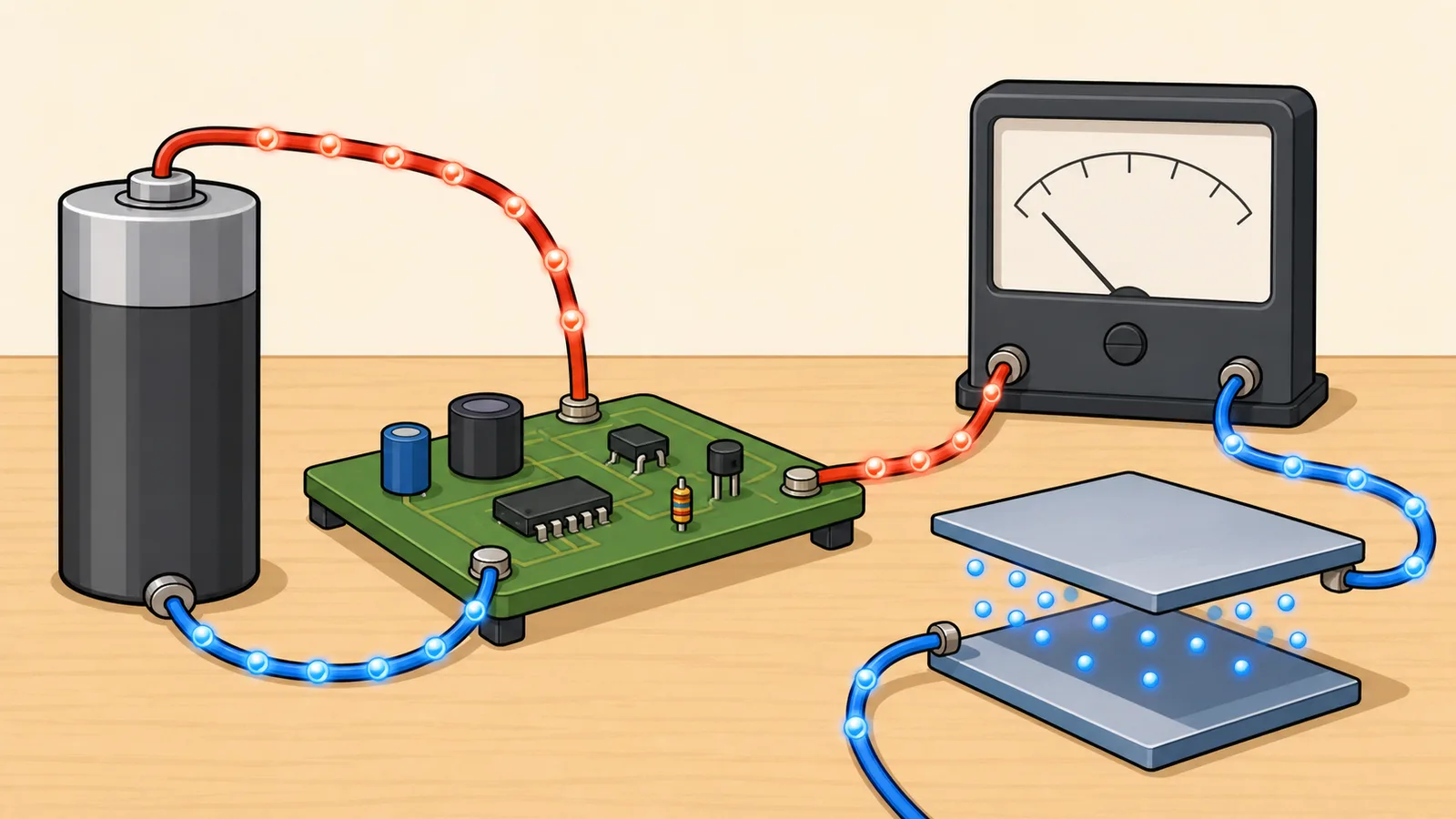
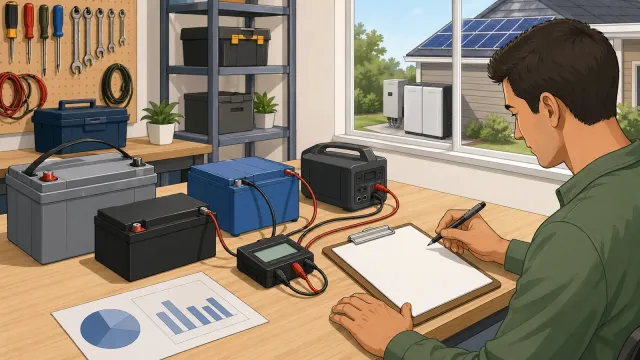
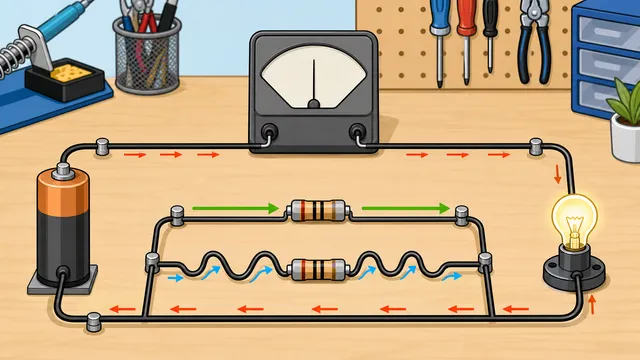
Use this electric charge converter to compare coulombs, ampere-hours, mAh, faradays, elementary charges, statcoulombs.
Last updated
Electric charge converter Convert a charge amount across coulombs, SI prefixes, ampere-hours, faradays, elementary charges, statcoulombs, and abcoulombs for batteries, electronics, electrochemistry, and electrostatics.
Examples
Non-negative only
Charge magnitude cannot be negative here. Enter zero or a positive amount to compare battery-scale, SI, and CGS equivalents.
Electric charge converter: compare coulombs, amp-hours, faradays, and statcoulombs
An electric charge converter moves one charge quantity across the SI coulomb family, battery-oriented amp-hour units, particle-scale elementary charges, electrochemistry faradays, and historical CGS references.
What this electric charge converter covers
This page treats electric charge as a pure unit-conversion problem. It accepts a non-negative charge value, converts it into coulombs, and then expands the same quantity across megacoulombs, kilocoulombs, millicoulombs, microcoulombs, nanocoulombs, picocoulombs, ampere-hours, milliamp-hours, microamp-hours, faradays, elementary charges, statcoulombs, and abcoulombs.
That grouped layout is useful because the most readable unit depends on context. Battery discussions often start in amp-hours, electrostatics references may use statcoulombs or abcoulombs, electrochemistry notes may use faradays, particle-scale explanations may use elementary charge, and everyday circuit examples often sit naturally in coulombs or SI submultiples.
The conversion anchors behind the result
Coulombs are the baseline for the conversion sheet. Battery-style units are tied back to coulombs through time and current, while SI prefixes simply scale the same base quantity by powers of ten.
The result panel keeps the coulomb baseline visible so you can verify that every supporting value is just a different expression of the same charge amount.
1 Ah = 3600 C
An ampere-hour is the charge moved by one ampere over one hour.
1 mAh = 3.6 C; 1 µAh = 0.0036 C
Smaller battery-capacity units still resolve directly to coulombs.
1 statC ≈ 3.336 x 10^-10 C
The statcoulomb is included for historical CGS electrostatics references.
1 abC = 10 C; 1 e = 1.602176634 x 10^-19 C
Abcoulombs cover CGS electromagnetic references, while elementary charge gives a particle-scale comparison.
1 Faraday ≈ 96,485.332 C
A faraday represents the charge of one mole of elementary charges, which is useful in electrochemistry contexts.
How to read the grouped result sheet
The SI section keeps the number readable for electronics-scale values, the battery section lets you compare the same charge against capacity-style labels, the particle and chemistry section bridges elementary-charge and faraday notation, and the CGS section helps when an older electrostatics source uses statcoulombs or abcoulombs.
The headline result chooses a human-friendly unit automatically, but the supporting sheet is usually the more useful part of the page because it shows every scale side by side without losing the original input.
Worked example: converting battery charge into coulombs
Suppose a small cell is labelled 2500 mAh and you need the same stored charge in coulombs for a physics worksheet or electronics sanity check. The converter first reads 2500 mAh as 2.5 Ah, then multiplies by 3600 coulombs per ampere-hour to get 9000 C.
The same result sheet also shows the particle-scale comparison, which is intentionally huge: one coulomb already represents many elementary charges. That side-by-side view helps prevent a common mistake where a battery-capacity label is treated like voltage or stored energy instead of charge.
2500 mAh = 2.5 Ah = 2.5 x 3600 C = 9000 C
Convert milliamp-hours to ampere-hours first, then use the ampere-hour to coulomb conversion.
When faradays and elementary charges are useful
Most practical electronics work does not need elementary-charge or faraday output, but those rows are useful when a problem crosses from ordinary circuit notation into physics or chemistry notation. Elementary charge is the natural comparison when the question is about charge carriers, ions, electrons, or quantized charge.
Faraday output is useful in electrochemistry because it links macroscopic charge to one mole of elementary charges. It should not be confused with the farad, which is a capacitance unit; the converter labels the faraday row as a charge reference so the distinction stays visible.
What this converter does not model
This calculator does not estimate energy, voltage, battery runtime, discharge behaviour, electrochemical yield, or circuit current over time. It only converts one charge quantity into equivalent unit expressions.
Use it as a planning and educational reference. If your next question is about stored energy or runtime, move to an energy or battery-specific calculator that includes voltage, power draw, and system assumptions.
Frequently asked questions
What is an electric charge converter used for?
An electric charge converter changes one charge value into equivalent units such as coulombs, ampere-hours, milliamp-hours, elementary charges, faradays, statcoulombs, and abcoulombs. It is most useful when a source, worksheet, component note, or battery label uses a different charge unit from the one needed in the next calculation.
Why can the same charge be shown in both coulombs and amp-hours?
Because amp-hours are also a unit of electric charge. They are just a larger, battery-oriented way to express the same quantity that coulombs express in SI form.
How many coulombs are in one ampere-hour?
One ampere-hour is 3600 coulombs. The relationship comes from time: one ampere is one coulomb per second, and one hour contains 3600 seconds.
Can I convert mAh to coulombs without knowing voltage?
Yes. Milliamp-hours and coulombs are both charge units, so voltage is not needed for that conversion. Voltage becomes necessary only when you want energy, such as watt-hours or joules, rather than charge.
How many elementary charges are in one coulomb?
One coulomb is about 6.2415 x 10^18 elementary charges. The reverse conversion uses the exact elementary charge value of 1.602176634 x 10^-19 coulombs per elementary charge.
Is a faraday the same thing as a farad?
No. A faraday is a charge amount equal to the charge of one mole of elementary charges, while a farad is a capacitance unit. The similar names make the distinction easy to miss, so use the faraday row only when the task is about charge, not capacitance.
When would I use statcoulombs or abcoulombs?
Use statcoulombs for older CGS electrostatic references and abcoulombs for older CGS electromagnetic references. Most modern electrical work should use coulombs, ampere-hours, or SI-prefixed coulomb units instead.
Does this tell me how much energy a battery stores?
No. Charge and energy are related but not identical. To estimate stored energy you also need voltage, which is why battery-energy calculators convert charge into watt-hours or kilowatt-hours using a voltage input.
Why does the result include very large or very small numbers?
Electric charge spans extremely different scales. A battery label can represent thousands of coulombs, while one elementary charge is far below one picocoulomb. The grouped result sheet keeps those scale differences visible instead of hiding them behind one pairwise conversion.
Why include statcoulombs at all?
Because older electrostatics and CGS-based references still use them. Keeping statcoulombs in the sheet makes it easier to compare those references against modern SI values.