Convert electrical conductance between siemens, SI prefixes, ampere per volt, and mho while seeing reciprocal resistance and current-per-volt context.
Last updated
Electric conductance converter Convert electric conductance across siemens, common SI prefixes, and the mho alias without losing the base siemens value or its reciprocal resistance meaning.
Presets
What this converter covers
This calculator keeps conductance anchored to siemens and shows the common SI prefix ladder alongside the legacy mho spelling used in older references.
Quick checkpoints
1 S = 1 A/V = 1 mho = 1/Ω. 1 mS = 1,000 µS. If conductance rises, the equivalent resistance falls because conductance is the reciprocal of resistance.
Enter a conductance value Provide a value to compare siemens, SI prefixes, and the historical mho alias side by side.
Electric conductance converter: compare siemens, prefixes, mho, and reciprocal resistance
An electric conductance converter restates one conductance value across siemens, the common SI prefix ladder, the ampere-per-volt definition, and the older mho naming convention that still appears in some legacy references.
What this electric conductance converter covers
This page converts a non-negative conductance across nanosiemens, microsiemens, millisiemens, siemens, kilosiemens, megasiemens, ampere per volt, and mho.
That keeps small sensor and solution-admittance readings readable while still supporting larger conductance values used in heavier electrical contexts, the defining A/V relationship, and older documentation.
Siemens stay as the baseline
The converter first resolves the entered value into siemens. Every other result is then a scaled form of that same conductance, which is why the siemens baseline stays visible in the summary.
Keeping that baseline in view is especially helpful when the same magnitude could be written naturally as µS, mS, or S depending on the measurement range.
1 S = 1,000 mS = 1,000,000 µS = 1,000,000,000 nS
The common SI prefix ladder changes readability without changing the underlying conductance.
1 kS = 1,000 S; 1 MS = 1,000,000 S
Large-prefix forms keep unusually high conductance values readable.
1 mho = 1 S
Mho is the historical alias for siemens and is included so older references can be read directly.
1 S = 1 A/V
The siemens can also be read as one ampere of current per volt of potential difference for an ideal ohmic path.
Electrical resistance and conductance are reciprocals
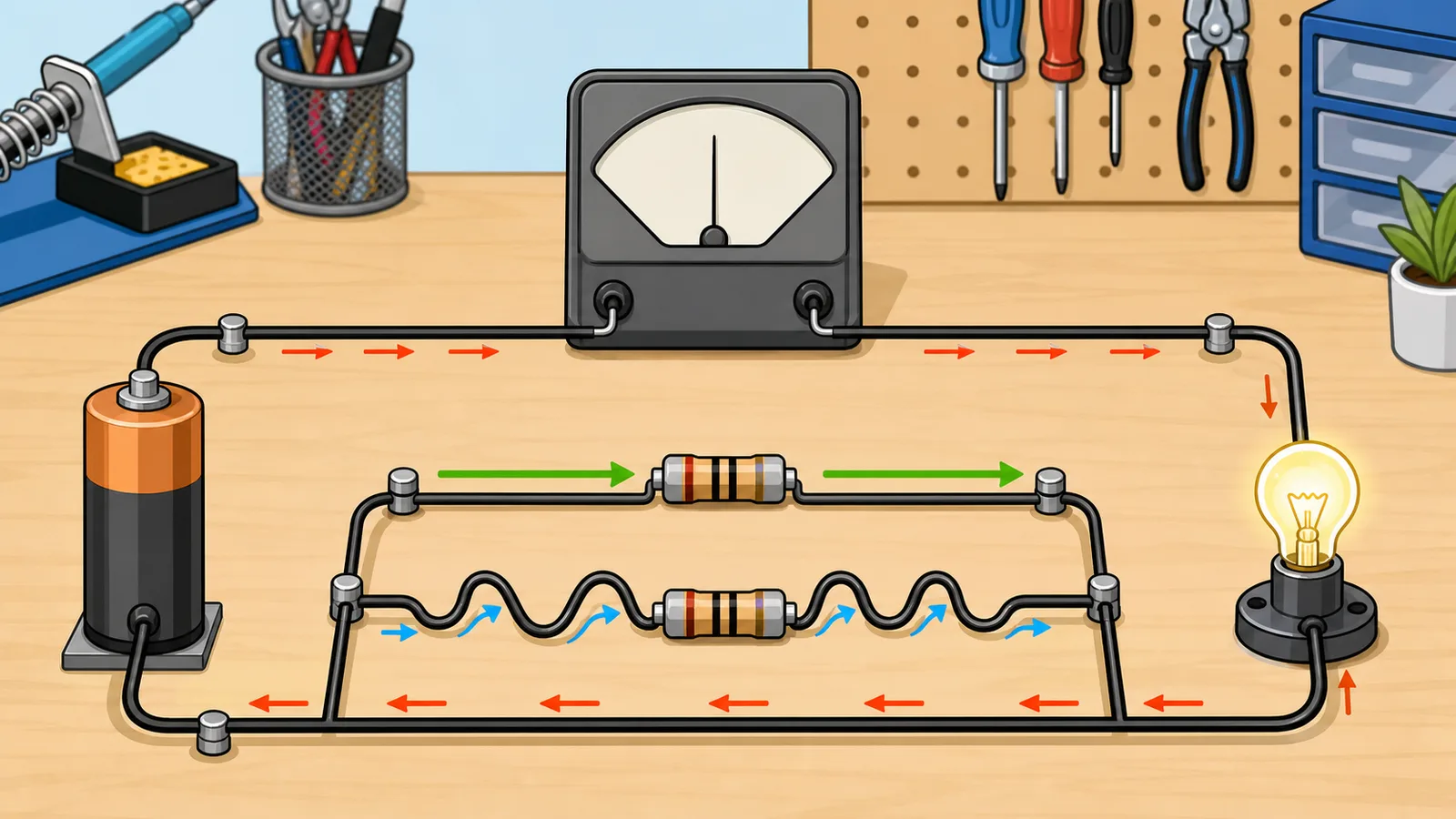
A major reason users search for electric conductance is that they are trying to connect it back to resistance. Those quantities move in opposite directions: conductance rises when resistance falls, and resistance rises when conductance falls.
The relationship is simple but important. Conductance in siemens equals 1 divided by resistance in ohms. That means 1 siemens corresponds to 1 ohm of reciprocal resistance, 0.5 siemens corresponds to 2 ohms, and 10 siemens corresponds to 0.1 ohm.
This page is still a conductance converter rather than a full resistance solver, but showing the reciprocal ohm value gives users a more decision-useful result than a prefix ladder alone.
G = 1 / R
Conductance equals the reciprocal of resistance when the resistance is expressed in ohms.
R = 1 / G
Resistance equals the reciprocal of conductance when conductance is expressed in siemens.
Ampere per volt links the conversion to Ohm's law
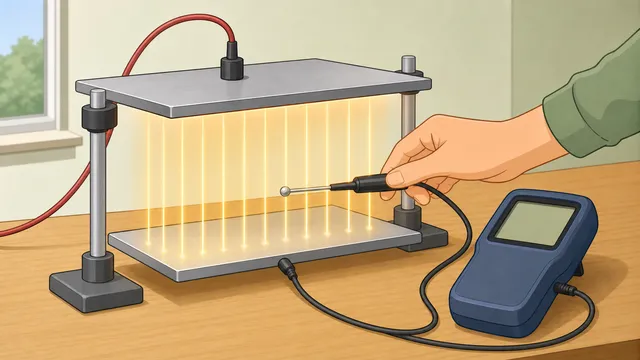
A basic conductance conversion can stop at a source-unit and target-unit answer, but the practical meaning of a siemens is current per volt. One siemens means one ampere of current for each volt across an ideal ohmic path, while one millisiemens means 0.001 amps per volt.
The calculator therefore shows both the unit sheet and a current-per-volt interpretation. That makes it easier to connect a unit conversion back to conductance-form Ohm's law without pretending this page is a full circuit simulator.
For example, a conductance of 5 mS corresponds to 0.005 A/V. Across a 12 V ideal ohmic path, that same conductance would imply 0.06 A before any real-world tolerance, heating, frequency, or non-ohmic effects are considered.
I = G × V
Current equals conductance multiplied by voltage for an ideal ohmic path.
G = I / V
Conductance can also be inferred from current divided by voltage when the path behaves ohmically.
Why conductance is not the same as conductivity
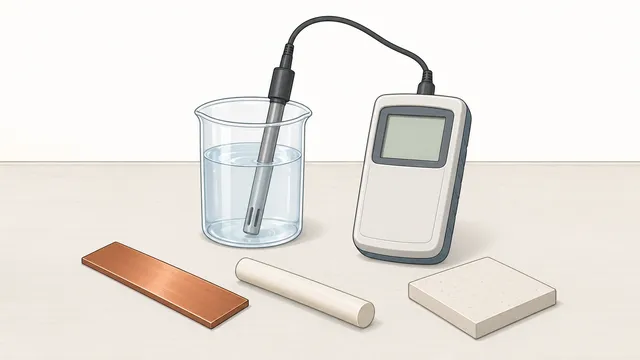
Conductance describes the ease of current flow for a whole path or device under stated conditions. Conductivity is a material property per unit geometry. Converting one does not automatically convert the other, which is why `siemens per meter` and `siemens per metre` belong to conductivity intent rather than this conductance page.
That distinction matters because a high-conductivity material can still produce a modest total conductance if the path is long, thin, or otherwise geometry-limited.
What this converter does not estimate
This calculator does not infer geometry, resistance, admittance of reactive elements, or material conductivity from a conductance value. It converts the conductance quantity itself between units only.
Use it as an educational and planning reference. If the next step depends on geometry, resistance, or material properties, switch to the calculator that models that relationship directly.
Frequently asked questions
Is mho different from siemens?
No. Mho is the older name for the same unit. A value of 1 mho is exactly 1 siemens.
Why would I use µS instead of S?
Because small conductance values are often easier to read in microsiemens or millisiemens. The unit choice changes readability, not the underlying electrical quantity.
Does this tell me a material's conductivity?
No. Conductivity is a material property and depends on geometry when translated into total conductance. This page only converts conductance units.
What is the relationship between electrical resistance and conductance?
They are reciprocals. Conductance in siemens equals 1 divided by resistance in ohms, and resistance in ohms equals 1 divided by conductance in siemens. If conductance rises, the equivalent resistance falls.
Is 1 mho the same as 1 siemens?
Yes. Mho is the historical alias for siemens, so 1 mho is exactly 1 siemens. The older name still appears in some legacy references and educational materials.
Is siemens per meter the same as conductance?
No. Siemens per meter or siemens per metre is a conductivity unit, not a conductance unit. Conductance is measured in siemens for a whole path or device, while conductivity is a material property per unit length and cross-section context.
Why might a reading be easier to use in µS or mS instead of S?
Because small conductance values can be awkward to read in plain siemens. Rewriting the same quantity in microsiemens or millisiemens improves readability without changing the underlying electrical conductance.
Is one siemens the same as one ampere per volt?
Yes. One siemens is equivalent to one ampere per volt for the conductance relationship. That means a conductance of 1 S corresponds to 1 A/V, 1 mS corresponds to 0.001 A/V, and 1 µS corresponds to 0.000001 A/V.
Can I use this result with conductance-form Ohm's law?
You can use the siemens value in the ideal relationship I = G × V when the path behaves ohmically and the voltage is known. The converter shows the current-per-volt interpretation to make that connection easier, but it does not model non-ohmic devices, heating, alternating-current impedance, or measurement uncertainty.