Skip to content
Calcipedia
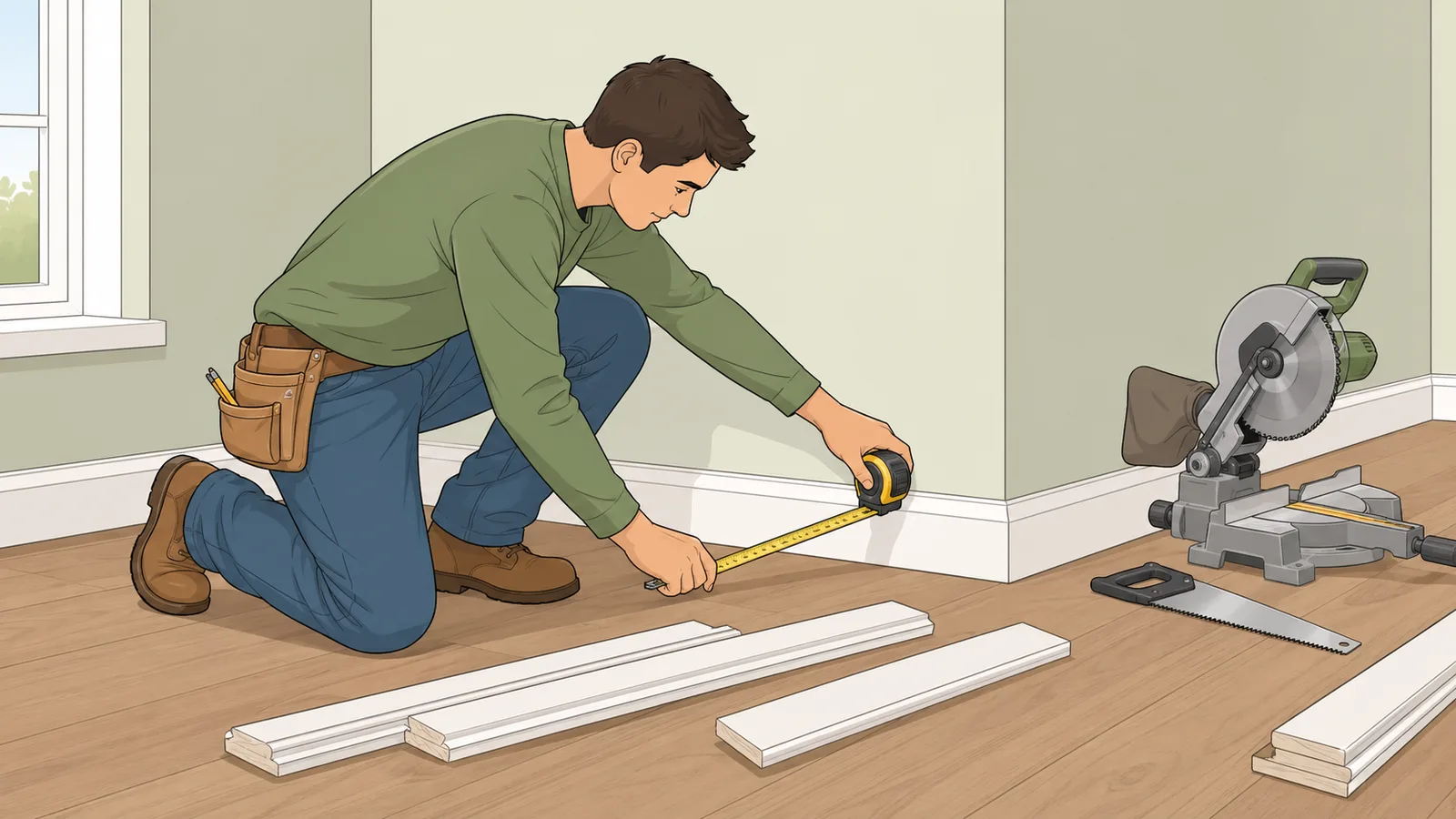
Trim and Molding Calculator instructional illustration

Trim and Molding Calculator

Estimate trim and molding linear footage from room dimensions or measured wall runs, then plan waste, stock pieces, repeated rooms, and optional material cost.

Last updated

Trim order planner Estimate baseboard, chair rail, or simple molding linear footage, opening deductions, waste, stock-piece count, and optional material cost before you buy trim.

Optional cost display

Enter a price per ft to turn the purchased stock length into a material estimate. Currency preference only changes the displayed symbol.

Quick scenarios
Opening deductions per room
Common stock lengths

Result

60.00 ft

Buy 5 full 12.00 ft pieces to cover 57.12 ft after deductions and waste.

Run before deductions
54.00 ft
Opening deduction
3.00 ft
Net run before waste
51.00 ft
Waste added
6.12 ft
Pieces needed
5
Overage after rounding
2.88 ft

Order interpretation

Order 5 full stock pieces for 1 room, then build a cut list before making final cuts.

Rooms
1
Stock efficiency
95.2%
Rounding buffer
5.0%

How to use this result

Use the purchased length and piece count for your material order, then mark each wall on a room-by-room cut list. Add extra material if the job has many miters, scarf joints, outside returns, fragile profiles, stained finish work, or long runs where matching grain and factory ends matters.

← All Framing & Carpentry calculators

Finish Carpentry

Trim and molding calculator: linear feet, stock pieces, and cost planning

A trim and molding calculator helps you estimate how much trim to buy for a room before you order baseboard, chair rail, shoe molding, or another simple linear profile. It turns room dimensions or a measured wall run, opening deductions, repeated rooms, waste allowance, stock lengths, and optional price per linear foot into a practical order quantity.

What a trim calculator measures

Most trim estimating starts with linear run, not area. For a typical room, that means measuring the perimeter, subtracting openings that will not receive trim, and then adding a waste allowance for cuts, corners, and fitting. A trim and molding calculator speeds up that takeoff work before you buy materials.

That is useful for baseboard, simple wall molding, picture rail, chair rail, shoe molding, quarter round, and similar finish-carpentry jobs where the main question is how much linear stock to order. The result is especially helpful once stock lengths are involved, because the number of pieces you need rarely matches the raw linear footage exactly.

The calculator supports two common estimating workflows. Use room dimensions when a rectangular room perimeter is a good starting point, or use measured wall run when you have already walked the space with a tape measure and want the calculator to handle repeated rooms, opening deductions, waste, stock-piece rounding, and material cost.

Core trim formulas

The main calculation starts with room perimeter or a measured run, subtracts door and window openings, then adds waste before dividing by the stock length of the trim. Because trim is purchased in whole lengths, the final order rounds up to a full piece count.

When you are estimating multiple similar bedrooms, apartments, hallways, or repeated wall runs, the calculator multiplies both the run and the per-room opening deductions before applying waste. That makes the result more useful than a single-room baseboard calculator when you are ordering material for a small project package rather than one isolated room.

Perimeter run = 2 x (Room length + Room width)

A simple rectangular room uses perimeter as the starting point for any linear trim estimate.

Gross run = Per-room run x Matching rooms

Repeated rooms or identical wall runs are scaled before opening deductions and waste are applied.

Net run = Gross run - Opening deductions

Door and window openings can be deducted when that part of the wall will not receive the molding being estimated.

Pieces needed = ceil((Net run x (1 + Waste%)) / Stock length)

Trim has to be bought in whole stock lengths, so the waste-adjusted run is always rounded up to a whole-piece count.

Estimated material cost = Purchased run x Price per linear unit

Optional pricing uses the purchased stock length rather than the exact net run, because that is what you actually buy.

Why stock length matters

A raw linear-foot result is only the first step. Stock length matters because join placement, corners, scarf joints, and short offcuts can force you to buy more total trim than the run alone suggests. That is why the calculator shows both the waste-adjusted run and the number of stock pieces needed.

For example, a room might need only 47 linear feet of trim after waste, but if the stock comes in 12-foot lengths you still have to buy 4 pieces, or 48 feet in total. That piece count is often the more useful number when you are ordering materials from a supplier.

The stock efficiency and rounding buffer are meant to catch a common ordering mistake: choosing a short stock length that technically covers the footage but creates too many joints or too much unusable offcut. If rounding adds a large buffer, compare 8 ft, 12 ft, and 16 ft pieces, then think through whether the leftover pieces can actually be reused on short walls, closets, or returns.

Opening deductions and trim type

Door and window deductions depend on the profile you are estimating. Baseboard usually stops at door casing, so door openings are commonly deducted. Chair rail, picture rail, and decorative wall molding may continue around more features, while shoe molding or quarter round can be interrupted by cabinets, thresholds, and transitions.

Use the opening fields for the parts of the run where the selected trim profile will not be installed. If you are unsure, leave the deduction conservative and carry a higher waste allowance rather than under-ordering a profile that may be hard to match later.

  • For baseboard, deduct door openings where the baseboard stops at casing.
  • For shoe molding or quarter round, measure along the finished floor line and account for cabinets, thresholds, and transitions.
  • For chair rail or picture rail, measure the actual wall run at the installation height rather than assuming the floor perimeter is identical.
  • For crown molding, use a crown-specific calculator when corner counts, spring angle, or square-corner miter guidance matter.

Worked example

Suppose you are planning baseboard for a 15 ft by 12 ft bedroom with one 3 ft door opening, no window deduction, 12% waste, and 12 ft stock lengths. The room perimeter is 54 ft, the net run after the door deduction is 51 ft, and the waste-adjusted run is 57.12 ft.

Because stock is purchased in full pieces, the order rounds up to 5 pieces of 12 ft trim, or 60 ft purchased. If the profile costs $2.50 per linear foot, the material-only estimate is based on the purchased 60 ft, not the 57.12 ft theoretical run.

What this estimate does not cover

This is a simple linear-estimating tool. It does not model miter patterns, inside and outside corner returns, scarf-joint placement, casing sets around openings, stair skirt details, irregular room shapes, or cut-list optimization. It also assumes that the average door and window widths you enter are good enough for a planning deduction.

Use the result as a takeoff aid, then confirm the final piece count from a room-by-room cut list if the job includes many corners, detailed profiles, long stained runs, expensive hardwood, fragile MDF, or high finish expectations.

Material cost is intentionally limited to trim stock. A complete project budget may also include adhesive, nails, caulk, filler, primer, paint or stain, delivery, sales tax, tool rental, and labor.

Frequently asked questions

How do I calculate how much baseboard I need?

Start with the room perimeter, subtract door openings where the baseboard stops, add a waste allowance, and then round up to the stock lengths sold by the supplier. This trim and molding calculator does those steps together and shows the linear footage, full pieces to buy, and optional material cost.

Should I deduct windows when estimating trim?

Only if the molding you are estimating does not run under those openings. Baseboard often stops at door openings, while other molding types may or may not be interrupted by windows, so the deduction depends on the trim profile and installation height being planned.

How much waste should I add for trim and molding?

Simple rectangular rooms may need only a modest allowance, while rooms with many corners, returns, long scarf joints, fragile profiles, or stain-grade finish work may need more. Many planning guides use a waste allowance to cover miters and fitting, but the right amount depends on profile cost, room layout, and how much matching spare material you want to keep.

Why does the stock-piece count matter more than the raw linear footage?

Because trim is sold in full lengths. Even if the linear footage suggests you need slightly less material, the supplier may still require you to round up to another full piece once stock length and offcuts are considered. The piece count is also what helps you decide whether 8 ft, 12 ft, or 16 ft stock is the better ordering choice.

Can I use this as a baseboard calculator?

Yes. Use the room-dimensions mode for a rectangular room, deduct door openings where the baseboard stops, enter the stock length you plan to buy, and add a waste allowance for miters, coped joints, bad cuts, and spare repair material.

Can I use measured wall lengths instead of room length and width?

Yes. Switch to measured wall run when the room is not rectangular, when only part of a room receives trim, or when you have already measured the walls individually. The calculator can still apply repeated-room scaling, opening deductions, waste, stock rounding, and optional price per linear foot.

Should shoe molding or quarter round be estimated separately?

Usually yes if it is a separate profile. Shoe molding and quarter round often follow a similar floor-line run to baseboard, but they may stop at different transitions, cabinets, or thresholds, and they are purchased as a different material. Estimate each profile separately if you need both.

Does the calculator create a cut list?

No. It estimates order quantity and stock pieces, but it does not decide which wall cuts should come from each board. Before cutting, make a room-by-room cut list, prioritize long walls, and check whether offcuts can serve short walls or returns.

How do I estimate trim cost from linear feet?

Enter the price per linear foot or metre and the calculator multiplies that price by the purchased stock length. That gives a material-only estimate for the trim itself; finishing supplies, fasteners, delivery, tax, tools, and labor should be budgeted separately.

Is this the same as a crown molding calculator?

Not exactly. This page is for baseboard, chair rail, shoe molding, quarter round, and other simple linear trim runs. Crown molding often needs extra corner and miter guidance, especially when spring angle and ceiling conditions matter, so a dedicated crown molding calculator is a better fit for that intent.

Also in Framing & Carpentry

Related

More from nearby categories

These related calculators come from the same leaf category, nearby sibling categories, or the same top-level topic.