Use this wainscoting layout calculator to balance panel openings across a wall, compare the result with your target spacing.
Last updated
Wainscoting layout planner Estimate balanced panel spacing, compare it with your target opening, and plan awkward end conditions with matching or custom terminating stiles before you cut trim.
Termination stiles
Enter wall dimensions Add the wall size, panel count, target spacing, and stile and rail sizes to compare a balanced panel layout and check whether custom end stiles solve a doorway, stair, or casing condition.
Wainscoting layout calculator guide: panel spacing, stile width, and trim footage
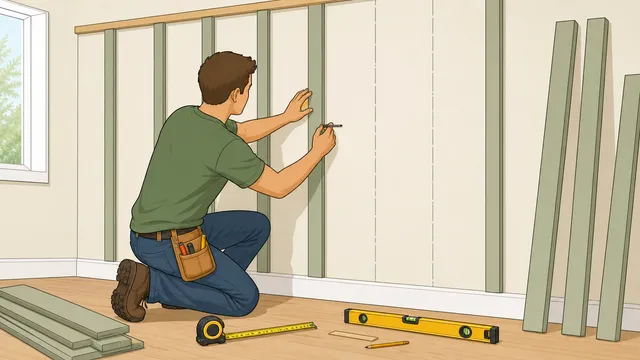
A wainscoting layout calculator helps you balance panel openings across a wall before you start cutting stiles, rails, and moulding. It is most useful when you want to know how to space wainscoting panels evenly, whether the balanced opening will look right, how custom end stiles change the layout, and how much stile, rail, and trim footage you need before ordering material.
What a wainscoting layout calculator is deciding
Wainscoting is mostly a layout problem before it becomes a cutting problem. Once the wall width, panel count, stile width, and rail size are known, the key question is whether the panel openings will land close to the visual spacing you want. A layout calculator solves that balance quickly instead of relying on repeated hand sketches.
That makes this kind of panel layout calculator useful for traditional wall treatment, raised-panel style feature walls, dining-room trim, hallways, and painted millwork projects. It helps you compare the balanced opening that actually fits the wall against the target spacing you had in mind before you commit to the cut list.
Core wainscoting formulas
The layout starts by reserving the stile widths across the wall. The remaining width is divided evenly between the chosen number of panels to create the balanced panel opening, and the panel opening height is then estimated from the wall height minus the top and bottom rail build-up.
Balanced panel opening = (Wall width - ((Panel count + 1) x Stile width)) / Panel count
This spreads the available width evenly after allowing for one stile at each end and the stiles between adjacent panels.
This gives a planning opening height after deducting the top and bottom rail build-up and a small reveal allowance.
Trim footage = Total stile length + Total rail length + Total panel moulding perimeter
The material estimate combines the linear footage of the main stiles and rails with the moulding needed around each panel opening.
How to use the target spacing input well
The target spacing is best treated as a design goal rather than a rigid rule. The actual balanced opening may land slightly wider or narrower depending on the wall width and the panel count you choose, and that difference is often what tells you whether to keep the count or change it before cutting.
For example, if the balanced opening comes out noticeably wider than your target, you may prefer one more panel. If it comes out much narrower, reducing the count could create a calmer layout. That comparison is more useful than forcing one fixed opening width and ending up with awkward end conditions.
Why custom end stiles matter in a real wainscoting layout
Many online wainscoting layout tools assume the left and right end stiles are identical. That is fine for a clean uninterrupted wall, but it often breaks down near door casing, a return, a stair stringer, or a corner where one end needs more breathing room than the other. A better panel layout calculator should let you keep the internal stile width consistent while testing different left and right terminating stiles.
That matters because the panel openings may still balance nicely even when the end conditions are not identical. Seeing the usable panel zone and the difference between the left and right termination widths gives you a faster way to judge whether the layout still reads as intentional or whether you should change panel count before cutting MDF or hardwood trim.
How to avoid awkward end panels
The easiest way to keep wainscoting from looking forced is to check the end conditions before you cut anything. If the balanced opening leaves a skinny end panel or a stile that looks too cramped beside a doorway or corner, it is usually better to adjust the panel count or revise the target spacing first.
That is also where corner treatment matters. Inner corners, returns, and wall thickness can change the visual width of the first or last stile, so the layout should be treated as a field-verified starting point rather than a final shop drawing.
Stairway wainscoting layout and other tricky walls
A stairway wainscoting layout usually needs to be broken into separate planning zones instead of treated like one uninterrupted wall. Landings, sloped trim lines, and changing sightlines can make a mathematically balanced straight-run layout look wrong once it follows the stairs. It is usually better to measure each level section separately, then dry-fit the transition area where the layout changes direction.
The same idea applies to walls with radiators, built-ins, or heavy casing. Use the calculator to settle the broad spacing and compare a few end-stile options, then mark the wall and judge it from the normal room sightlines before you commit to the cut list.
What this estimate does not cover
This is a layout and material-planning tool, not a final shop drawing. It does not account for chair-rail transitions, outlet and switch locations, site-measured wall irregularities, profile-specific joinery, or the exact cut list for each piece. It also assumes a straight wall rather than returns, corners, or offset sections.
Use the result to settle the broad layout, then confirm the final panel spacing and trim lengths from field measurements before cutting finished stock.
Frequently asked questions
How do you space wainscoting panels evenly?
Start with the full wall width, subtract the total width taken up by stiles, and divide the remaining width evenly by the number of panels. A wainscoting calculator does that instantly and shows how close the balanced opening is to your target spacing.
Should all wainscoting panels be the same width?
Usually yes for a straight run. Balanced equal openings tend to look cleaner than forcing one panel count that leaves noticeably different end conditions, although real rooms sometimes need small adjustments around corners or obstacles.
What trim footage should I order for wainscoting?
You normally need the total stile length, total rail length, and any panel moulding perimeter or trim that frames the openings. The calculator helps you turn those parts into a rough linear-foot order before you build the final cut list.
Do the left and right end stiles have to match?
Not always. Matching end stiles usually looks cleanest on a straight uninterrupted wall, but a doorway, casing return, or corner can justify different terminating stile widths. The key is to keep the overall layout looking intentional rather than forcing perfect symmetry where the room does not allow it.
Can I use this for a stairway wainscoting layout?
Use it for the straight sections, but do not treat a stair wall like one simple uninterrupted rectangle. Stair stringers, landings, and changing sightlines usually mean you should plan each section separately and then dry-fit the transition where the layout changes.
Why do people search for a wainscotting layout calculator?
That spelling is common, but the layout questions are the same. Whether you search for a wainscoting layout calculator or a wainscotting layout calculator, the practical goal is to balance panel widths, avoid awkward end conditions, and estimate trim before cutting.
What is the best way to start laying out wainscoting?
Start with the full measured wall width, choose the panel count and stile sizes you want to test, and compare the balanced opening with your target spacing. Then check the end conditions against doors, corners, and other visual anchors before finalising the cut list.
Can this replace a shop drawing or cut list?
No. It is for layout planning. Final cuts should still be checked from field measurements, actual profile sizes, and the wall conditions on site.