Estimate raw meat, vegetarian mains, burgers, sausages, chicken, buns, sides, drinks, ice, and condiments for a barbecue from guest count, appetite.
Last updated
BBQ party food calculator Estimate how much meat, buns, sides, drinks, ice, and condiments to buy for a backyard barbecue. This page matches the bbq party food calculator, bbq meat per person, and barbecue shopping list intent while keeping the guest-count assumptions visible.
Quick starts
Appetite
Event length
Serving style
Weather
How the estimate works
The calculator starts from cooked portions, adjusts for appetite and event length, then converts the meat total back into raw shopping weight so the list already allows for normal grill shrinkage.
The menu style changes the split between burgers, sausages, and chicken, while sides-heavy menus shift a little more of the headroom into salads, slaw, beans, or vegetables.
Shopping plan
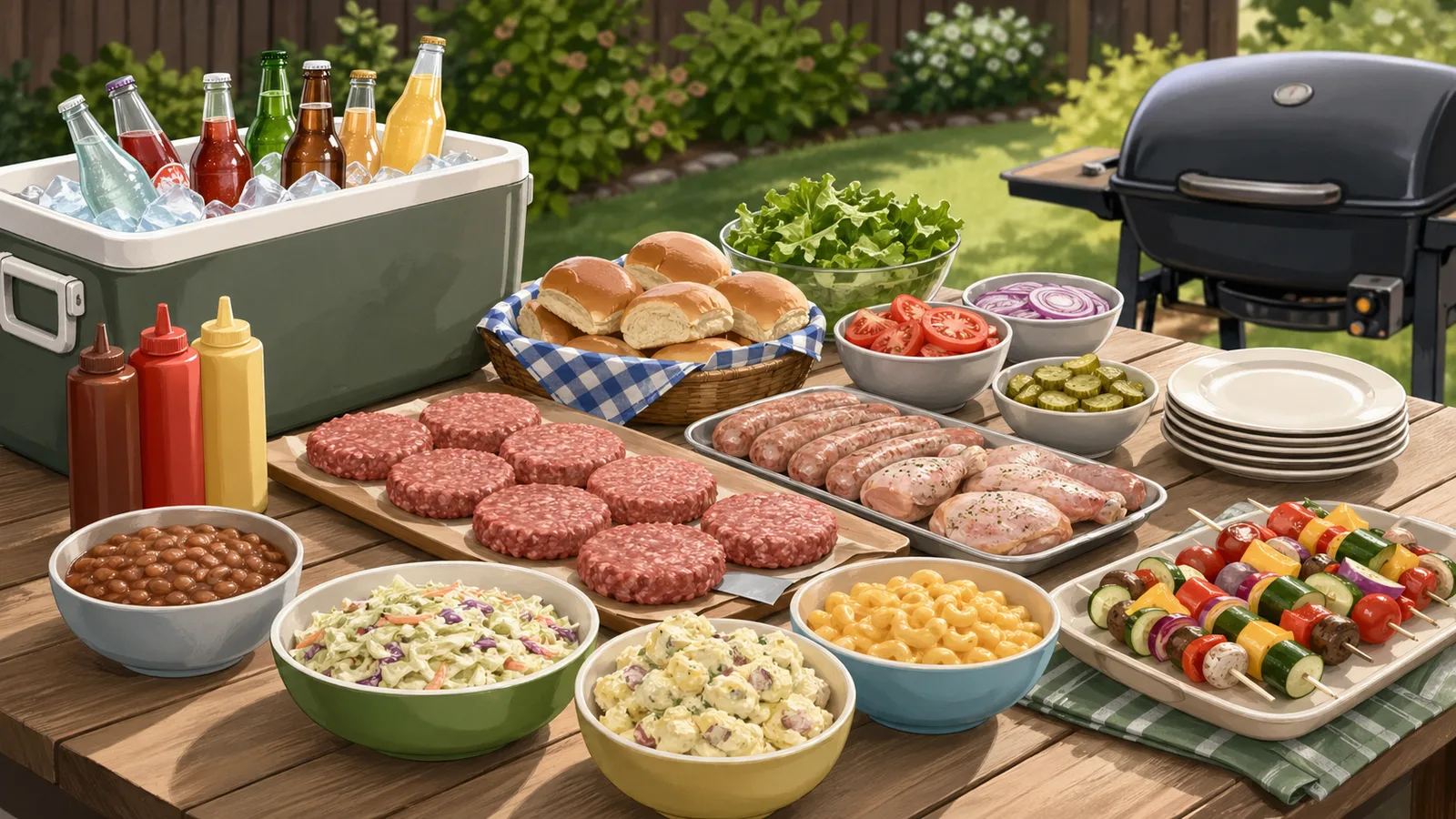
10.4 lb raw meat
Planning estimate for 16 guests, including 14 meat-eating guests and 2 vegetarian guests.
Raw meat per meat guest
0.7 lb
Sides per guest
0.4 lb
Drinks per guest
2.8
Ice per guest
2 lb
Burgers
12
Sausages
12
Chicken pieces
9
Vegetarian mains
2
Buns / rolls
28
Prepared sides
5.8 lb
Cold drinks
44
Planning note
Use these as practical shopping estimates. Real appetite, side variety, vegetarian options, and late-arriving guests can shift the final buy list, so keep a small safety buffer for meat and drinks.
Menu note
Balanced menus keep the meat, sides, and drinks in the middle so the shopping list stays easy to shop from a single store run.
Safety note
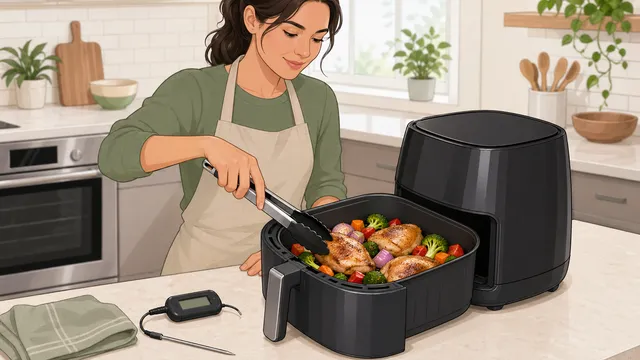
Keep cooked food hot and cold food chilled while the barbecue is in progress, and use a thermometer for anything that needs a safe internal temperature check.
Weather and diet note
Mild-weather drink and ice estimates assume normal cooler demand rather than peak-summer heat. 2 vegetarian guests are kept in the total headcount for sides, drinks, ice, and buns while the meat estimate is reduced.
Shopping sheet
Item
Amount
Planning note
Raw meat total
10.4 lb (4.7 kg)
Assumes roughly 25% cooking loss from raw to served meat.
Raw meat per meat-eating guest
0.7 lb
Useful as a quick BBQ meat-per-person checkpoint before you buy.
Burgers / patties
12
Based on the current meat mix, with about 40% of raw meat assigned here.
Sausages
12
Based on the current meat mix, with about 30% of raw meat assigned here.
Chicken pieces
9
Based on the current meat mix, with about 30% of raw meat assigned here.
Vegetarian mains
2
Plan plant-based patties, skewers, or substantial grilled vegetables for guests not eating meat.
Buns and rolls
28
Covers burgers, sausages, and vegetarian mains with a small breakage buffer.
Prepared sides
5.8 lb (2.6 kg)
Use across salads, slaw, potato salad, baked beans, or grilled vegetables.
Sides per guest
0.4 lb
Shows how much of the menu is being filled by non-meat dishes.
Cold drinks
44 servings (4 cases of 12)
Non-alcoholic drink estimate for the selected event length.
Drinks per guest
2.8
Short events need fewer drinks per person than long afternoon gatherings.
Ice
32 lb
Covers drink chilling plus a modest holding buffer.
Condiments
2 ketchup, 2 mustard, 2 BBQ sauce
Bottle counts assume regular squeeze-bottle service for a backyard barbecue.
BBQ party food calculator: estimate meat, buns, sides, drinks, ice, and condiments
A BBQ party food calculator turns guest count into a practical shopping list. This page also explains the main assumptions behind the bbq party food calculator result, highlights the supporting figures shown by the calculator, and helps the reader use the estimate without overstating what a quick online tool can prove.
How the barbecue estimate is built
The calculator starts from a cooked-serving assumption, then adjusts it for appetite and how long the event will run. It converts that cooked amount back into raw shopping weight so the list already reflects normal grill shrinkage and the fact that not every guest eats the same amount.
After that, the menu style shifts the mix between burgers, sausages, and chicken. Balanced menus keep the split even, meat-heavy menus push more of the budget into the grill, and sides-heavy menus let salads, slaw, baked beans, or potatoes carry more of the plate.
The result is a shopping sheet rather than a single meat number. That makes it easier to leave the store with the right buns, condiments, drink count, and ice the first time.
Raw meat to buy = Planned cooked servings ÷ cooking yield
The calculator assumes normal grill loss, so raw shopping weight is always higher than the amount that will be served.
Per-guest planning = Total quantity ÷ guest count
The per-person rows help you sanity-check the menu before you buy in bulk.
Longer events need a higher drinks and ice allowance
All-afternoon cookouts usually need more cold drinks and more ice than a quick meal.
How much meat per person a BBQ usually needs
Many crowd-planning guides land in the same general range: roughly half a pound of raw meat per guest for a burger-focused cookout, more for meat-heavy or all-day events, and less when the menu is loaded with sides. That is why the page treats appetite, event length, and menu style as real inputs rather than assuming one universal serving size.
A lighter crowd with plenty of salad and side dishes often needs less meat than a hungry crowd with only a couple of side options. Kids also usually eat less than adults, so a separate child count helps keep the estimate realistic.
Appetite is the biggest swing factor. Light eaters need less meat, standard eaters land in the middle, and hearty eaters can move the result up quickly. Event length is the next largest swing: a short meal is usually easier to plan than an all-afternoon barbecue with grazing and repeated plate refills.
The service style matters too. A meat-heavy cookout pushes more of the plan into burgers, sausages, and chicken. A sides-heavy menu usually means fewer raw pounds on the grill but more salad trays, beans, or other supporting dishes.
Vegetarian guests are now handled as part of the main plan rather than as an afterthought. They stay in the total headcount for sides, drinks, ice, and buns, while the meat line is reduced and a separate vegetarian-main row is added to the shopping sheet.
Sides, drinks, and ice are part of the answer
Competitor BBQ planners usually do not stop at the meat total. They also show drink counts, side counts, sauce bottles, and ice because those items are the easiest to forget until the last store run. This calculator follows the same approach so the result behaves like a real shopping list instead of a single headline figure.
The drink estimate is intentionally non-alcoholic. That keeps the food plan focused on guest hydration and makes the count more reliable across family events, office cookouts, and backyard gatherings. Ice rises with guest count and event length because longer events keep drinks in coolers for longer.
Hot weather raises the drink and ice estimate because people usually reach for more water, cans, and cooler space when food is served outdoors in summer heat. The weather control is intentionally simple: it changes the supporting items without pretending to predict every local temperature or shade condition.
Short events usually need about 2 to 3 drinks per person
This is a practical benchmark for quick gatherings with a single food service window.
Longer events often need about 3 to 4 drinks per person
Hot weather and longer service windows usually push the drink count higher.
Vegetarian guests reduce meat but still count for sides, drinks, ice, and buns
This keeps the BBQ shopping list practical when the group includes people who need plant-based mains.
Side dishes usually plan in pounds rather than servings
That keeps potato salad, coleslaw, beans, or grilled vegetables easier to compare on one shopping sheet.
Food safety still matters outdoors
The estimate is only half of the job. Raw and cooked foods still need to stay separate, burgers and chicken still need thermometer checks, and cold foods still need to stay cold while the grill is running. A good shopping list can still fail if the holding plan is weak.
Long events need extra attention because food can sit outside while people graze. Keep cooked items hot, cold items chilled, and do not leave food out indefinitely just because the barbecue is still underway.
Worked example: 16 guests, standard appetite, medium event
A balanced menu for 12 adults, 4 kids, and 2 vegetarian guests produces a shopping list that lands at about 10.4 lb of raw meat, or roughly 0.7 lb per meat-eating guest. That same setup also points to about 2 vegetarian mains, 28 buns, 44 drink servings, and 32 lb of ice once the drinks and holding buffer are added.
If you turn the same party into a long, meat-heavy all-afternoon BBQ on a hot day, the raw-meat total rises and the drink and ice rows rise even more sharply. That is a useful reminder that the calculator is not just a meat table; it is a whole-event planning tool.
When to adjust the result
Add a buffer if your guest list is still moving, if you expect very hungry adults, or if the event includes a long stretch before the grill starts. Reduce the meat slightly if there are many vegetarian guests, a large dessert spread, or a very side-heavy menu.
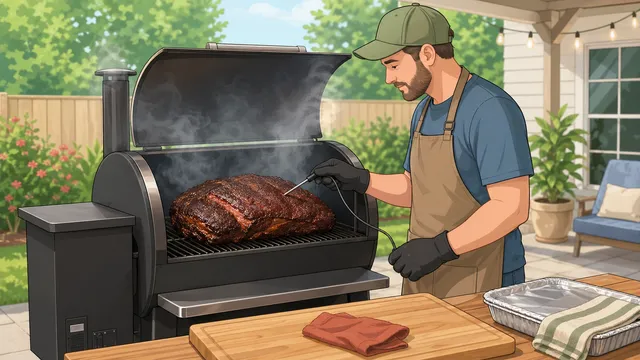
For brisket, pulled pork, ribs, or other bone-in or low-yield cuts, treat the meat line as a starting point and then adjust for cut-specific trimming and bone weight. The calculator is tuned for a general mixed BBQ menu, not a competition-style pitmaster loadout.
Frequently asked questions
How much meat do I need per person for a BBQ?
A practical starting point is around half a pound of raw meat per guest for a burger-focused BBQ, with more for hearty appetites or long events. The calculator adjusts that starting point for appetite, event length, and menu style.
How many burgers should I plan per guest?
A burger-heavy menu often works out to about one to two patties per guest once the total raw meat is split into the burger portion. The exact number depends on how much of the menu is assigned to sausages and chicken.
How many drinks should I buy for a BBQ?
Quick events often land around 2 to 3 drinks per person, while longer gatherings or hot-weather cookouts can move toward 3 to 4 drinks per person. The calculator turns that into servings and case counts so it is easier to shop.
How many sides should I serve at a barbecue?
Two or three sides is usually enough for a straightforward backyard BBQ. If the menu is sides-heavy, the calculator increases the side allowance so the plate feels full even when the meat total is a little lighter.
How much ice do I need for a BBQ party?
Ice depends on guest count and event length. Shorter events need less ice for cooler drinks, while long afternoon events need more because drinks stay in coolers for longer.
Should I count kids the same as adults?
No. Children usually eat less than adults, so the calculator scales kids separately. That keeps the meat, side, and drink totals closer to real life.
How should I plan BBQ food for vegetarian guests?
Count vegetarian guests in the total party size so they still receive sides, drinks, ice, buns, and condiments, then plan separate vegetarian mains such as plant-based patties, vegetable skewers, or a substantial grilled vegetable option.
Should I buy more drinks and ice for a hot-weather BBQ?
Yes. Hot-weather events usually need more water, soft drinks, and cooler capacity than the same headcount on a mild day. The calculator's hot-day setting raises both the drink and ice rows while leaving the meat math unchanged.
Does a long BBQ need more food?
Usually yes. Longer events tend to need more drinks, more ice, and sometimes a little more meat because guests may come back for seconds.
Can I use this for pulled pork or brisket?
Yes, but bone-in or low-yield cuts may need a cut-specific adjustment. The calculator is tuned for a mixed barbecue menu, so very large brisket or pork-shoulder events should be checked against the cut's actual yield.
How far in advance should I buy BBQ food?
Buy the dry goods and drinks first, then the meat closer to the event so freshness is easier to manage. If you are freezing anything, make sure you have enough freezer space before you commit to bulk buying.
What food safety rules matter most outdoors?
Keep raw and cooked foods separate, use a thermometer for doneness, and do not leave hot food sitting out for too long. Cold foods should stay chilled, especially during long summer events.