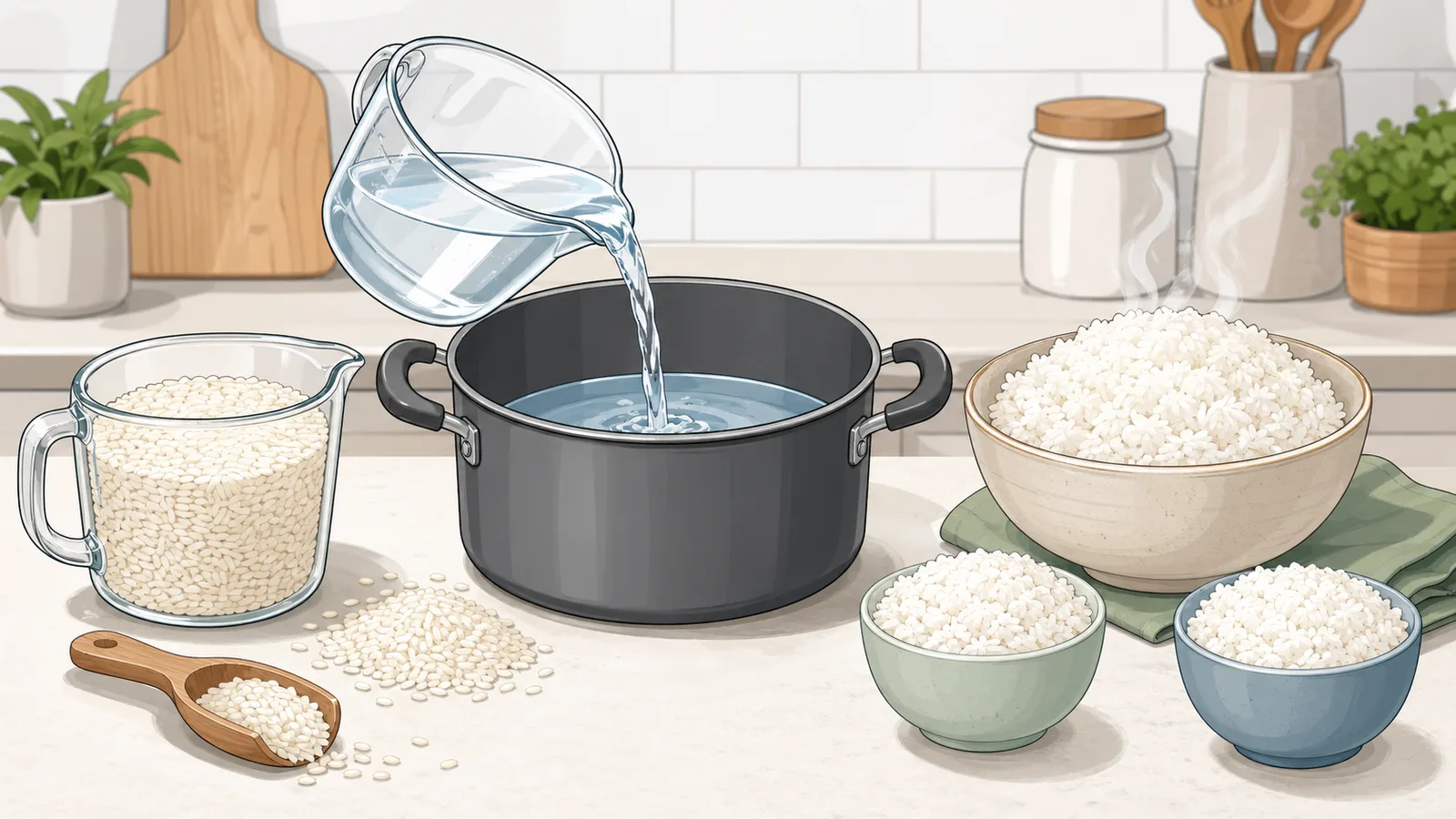
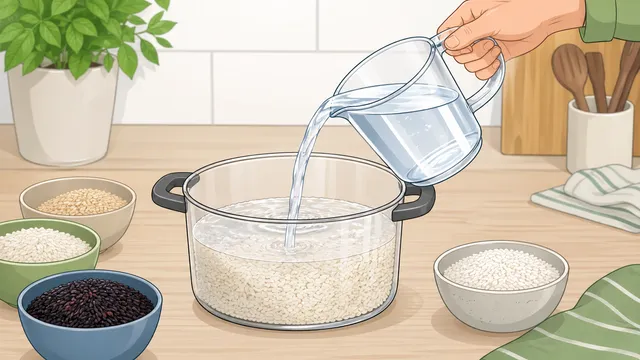
Use this rice calculator to plan dry rice, water, cooked yield, rice cooker starter amounts, and side or main servings by rice type and texture target.
Last updated
Planning mode
Rice type
Portion style
Uses about 0.75 cup cooked rice per person.
Cooking method
Texture target
Method note
Covered stovetop absorption: bring to a boil, reduce to low, keep the lid on, then rest before fluffing.
Rice plan
3.5 side servings
1 cups of white (long grain) makes about 2.5 cups cooked.
Dry rice
1 cups
185 g
Water to add
2 cups
473 ml
Cook time
18 min
Rest covered for 5 min
Cooked yield
2.5 cups
463 g
Ratio used1:2 rice-to-water by cups
Baseline stovetop water2 cups (473 ml)
Method and texture adjustmentNo adjustment
Per 1 cup dryAbout 2.5 cups cooked
Portion target0.75 cup cooked rice per side serving
Quick adjustmentAbout 32 tablespoons of water in total
How to use this batch
Best for fluffy side dishes, pilafs, and make-ahead meal prep.
Uses the baseline water ratio for the selected rice type.
Covered stovetop absorption: bring to a boil, reduce to low, keep the lid on, then rest before fluffing.
Rice calculator for servings, water ratio, and cooked yield by rice type
This rice calculator helps you answer the two questions that matter in the kitchen: how much dry rice you need and how much water to add. Use it either as a rice servings calculator for a group meal or as a rice-to-water ratio calculator when you already know the dry amount, then compare cooked yield, timing, and batch size by rice type.
How the rice calculator works
The calculator starts from one of two entry points. If you already know your dry rice amount, it multiplies that amount by the water ratio for the rice type you selected and then estimates cooked yield. If you are planning dinner for a group, it works backwards from your serving count and a practical cooked-portion assumption, then converts that target into dry rice, water, and timing.
That distinction matters because a user searching for a rice calculator often does not know whether they should start with cups, grams, or people. A better answer is to support both workflows. This page therefore acts as both a rice calculator by servings and a rice water ratio calculator, while keeping the numbers visible in cups, grams, and millilitres.
Water (cups) = Dry rice (cups) × Water ratio
For example, 2 cups of brown rice at a 1:2.5 ratio needs 5 cups of water.
Dry rice needed = Target cooked portions ÷ Yield per cup dry rice
When you plan by servings, the calculator reverses the usual process and sizes the dry batch from the cooked amount you want to serve.
Water ratios and cooking times by rice type
White long-grain rice works as the baseline for many home kitchens at around 1 cup rice to 2 cups water, usually with about 18 minutes of covered cooking. White short-grain and basmati generally need less water than long-grain white rice, while jasmine often sits between the two. Brown rice needs both more water and more time because the bran layer is still attached, and wild rice needs the most liquid and the longest cook of the group.
That is why a rice calculator should not assume one universal ratio. Even when two varieties begin with the same dry volume, they can demand different water totals and finish with different cooked yields. Basmati often stretches further than arborio, for example, which changes how many portions a batch can reasonably feed.
Arborio is included as a planning reference because users still search for risotto batch sizes, but true risotto is not an all-at-once absorption method. In practice, hot stock is added gradually while stirring, so the calculator's arborio output is best used to estimate dry quantity and total liquid planning rather than to replace a risotto recipe.
How much rice per person depends on the meal
A side dish and a rice-based main are not the same planning problem. If rice accompanies curry, stir-fry, chilli, or grilled meat, many kitchens only need roughly three-quarters of a cup of cooked rice per person. If rice is carrying the meal, a larger cooked portion is more realistic. That is why the calculator lets you choose a portion style before it turns servings into dry rice and water.
Worked example: suppose you need 4 main-course servings of white long-grain rice. Using a 1.25-cup cooked target per serving and a 2.5-cup cooked yield per 1 cup dry rice, the calculator recommends about 2 cups of dry rice. At a 1:2 ratio, that means 4 cups of water and about 18 minutes of covered stovetop cooking, followed by a short rest before fluffing.
The side-dish vs main-dish switch is an estimate, not a nutrition rule. Hungry adults, children, buffet service, leftovers, and meal-prep bowls can all shift the real number. The value of the calculator is that it gives you a repeatable planning baseline rather than a vague guess.
Tips for perfect rice every time
Rinsing remains one of the easiest upgrades for white rice, basmati, and jasmine. Washing away loose starch helps the grains stay separate and reduces the gummy surface texture that can make a batch feel heavy. A short soak can help basmati cook more evenly as well, but it is not mandatory for a good result.
These figures are calibrated for the stovetop absorption method: combine the measured rice and water, bring to a boil, cover, reduce to low heat, and let the water absorb without lifting the lid. A short covered rest after cooking helps steam finish the centre of the grain and keeps the rice from breaking apart when fluffed.
Rice cookers complicate the picture slightly. In many cases the dry-rice quantity is still the most important planning number, while the exact water level should follow the markings inside the cooker bowl. That is why the calculator keeps the dry-rice amount prominent even when it also shows the stovetop water ratio. If your machine has dedicated lines for white rice or brown rice, use those lines as the final authority.
The tool does not model every rice format or every local convention. It does not cover paella rice, every sushi-rice method, pressure-cooker timing, parboiled rice, evaporation differences from wide pots, or the extra liquid that stock, butter, coconut milk, or soaked grains can introduce. Use it as a strong first estimate, then adjust for your pot, burner, and preferred texture.
Rice cooker, texture, and leftover planning
Many searches for a rice calculator are really asking for a rice cooker water ratio or a way to make the same batch firmer or softer. The live calculator now keeps the covered-stovetop baseline visible, then shows the adjustment made for rice-cooker starter mode and the selected texture target. That makes the result easier to audit: you can see the normal absorption-method number before deciding whether to follow a cooker bowl marking, reduce water slightly for fried rice, or add a small amount for a softer main-course bowl.
This also helps when you need an uncooked to cooked rice calculator rather than only a water calculator. If a recipe calls for cooked rice, switch to the servings workflow and choose a side or main portion size, then use the dry-rice cups and grams as the shopping and cooking number. If you already cooked the rice and are working backwards, divide the cooked amount by the yield-per-cup figure shown in the results for the selected rice type.
For meal prep, the batch size is only half the decision. Cooked rice should not sit at room temperature for long periods before storage. If a large batch will become leftovers, spread it into shallow containers, cool it promptly, refrigerate it as soon as practical, and reheat only the amount you plan to eat.
Frequently asked questions
Does the ratio change in a rice cooker?
Usually, yes, but not always in a way that can be captured by one single ratio. The stovetop numbers on this page assume an absorption method in an ordinary saucepan. Many rice cookers trap steam more efficiently and have bowl markings calibrated for their own cycle. Use the calculator to decide how much dry rice you need, then let the cooker markings or the manufacturer's instructions settle the final water line.
Why does my rice come out mushy?
Too much water is still the most common cause, but it is not the only one. Rice can also turn mushy if the lid is lifted repeatedly, if the pan traps condensation poorly, or if the batch skips the resting period at the end of cooking. Short-grain rice is also naturally softer and stickier than long-grain varieties, so a result that feels mushy with basmati may actually be expected with sushi-style rice.
How many servings does one cup of dry rice make?
It depends on the rice type and whether rice is acting as a side or as the centre of the meal. One cup of dry white rice often yields about 2.5 cups cooked, which is roughly 3 to 4 side servings or around 2 main servings. Basmati and wild rice can stretch a little further, while arborio and brown rice may feel more substantial per portion. The calculator is useful because it turns those yield differences into a batch plan instead of forcing one generic rule.
Can I use this rice calculator for sushi rice or risotto?
You can use it to estimate batch size, but you should not treat the number as the whole method. Sushi rice is often cooked a little drier than standard short-grain rice before being seasoned, while risotto uses arborio rice and adds hot stock gradually rather than all at once. In both cases the calculator is most useful for deciding how much dry rice to start with, not as a full technique guide.
How much dry rice do I need for 4 people?
For 4 side servings of white long-grain rice, about 1.2 cups of dry rice is a practical starting point. For 4 main servings, the calculator rounds closer to 2 cups dry rice. The exact answer changes with rice type because basmati, brown rice, wild rice, and arborio do not all produce the same cooked yield from one dry cup.
Can I make rice firmer or softer with this calculator?
Yes. Use the texture target control. Firmer grains reduce the water slightly from the baseline, which is useful for fried rice, pilaf, and make-ahead bowls. Softer grains add a small amount of water when you want a more tender rice bowl. The adjustment is deliberately small so the rice type still does most of the work.
Is this an uncooked to cooked rice calculator?
Yes. If you enter dry rice, the result estimates cooked yield in cups and grams. If you need to work from a desired number of portions, use the servings mode and the calculator works backwards to the dry amount, water, and cook time. For a recipe that lists cooked rice, use the yield-per-cup dry figure as the reverse conversion guide.