Skip to content
Calcipedia
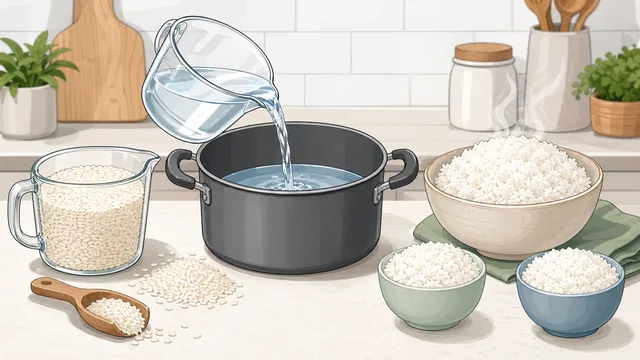
Rice Water Ratio Calculator instructional illustration

Rice Water Ratio Calculator

Calculate the rice-to-water ratio for cups or grams of dry rice by variety, cooking method, rinsing, soaking, texture target, and altitude.

Last updated

Rice-to-water ratio planner Enter cups or grams of dry rice, then adjust for rice type, cooking method, rinsing or soaking, texture target, and altitude. The result keeps the baseline rice-to-water ratio visible so you can see exactly why the final water amount changed.

Rice type

Cooking method

Rice preparation

Texture target

Result

2 cups water

Use 2 cups (473 ml) of water for 1 cups (185 g) of white (long grain). The final water-to-rice ratio is 1 : 2, compared with the baseline 1 : 2.

Water needed
2 cups

473 ml · 32 tbsp

Final ratio
1 : 2

per 1 cup dry rice

Cook and rest
18 min

Rest covered for 5 min

Dry rice
1 cups

185 g

Cooked yield
2.5 cups

463 g estimate

Altitude band
Sea level / low altitude

0 ft entered

Adjustment audit

Baseline stovetop water 2 cups (473 ml)
Cooking method No change
Preparation No change
Texture target No change
Altitude No change

What this means

White (long grain) starts from a 1 : 2 stovetop ratio. The selected method, preparation, texture, and altitude settings adjust that baseline to 1 : 2 for this batch.

Covered stovetop absorption keeps the baseline ratio visible: bring to a boil, reduce to low, keep the lid on, then rest before fluffing.

No preparation adjustment is applied; this is the baseline for dry rice measured before rinsing or soaking.

Uses the selected rice type, method, and preparation as the main drivers.

No altitude adjustment is applied at low elevation.

← All Ingredients & Conversions calculators

Cooking

Rice water ratio calculator for cups, grams, cooking method, and texture

The correct rice-to-water ratio depends on the variety of rice, the cooking method, and whether the grains were rinsed or soaked before cooking.

Why ratios differ between rice varieties

Different rice varieties have different starch structures, grain density, and bran content, all of which affect water absorption. Long-grain white rice stays fluffy and separate with a 1:2 ratio. Short-grain white rice is starchier and stickier — it needs less extra water because the starch holds moisture, hence 1:1.5. Basmati is a fine-polished long-grain rice that cooks very efficiently at 1:1.5. Brown rice has an intact bran layer that slows water absorption, requiring both more water (1:2.5) and more time (40 minutes).

The absorption principle: all the water you add should be fully absorbed by the time cooking is complete, leaving perfectly cooked grains without waterlogging or burning. The ratios are calibrated for stovetop absorption cooking with a tightly fitting lid.

The live calculator now keeps that baseline visible even when you change the setup. That matters because a rice cooker water ratio, a pressure cooker starter ratio, and a covered saucepan ratio are not the same problem. The dry rice still needs water to hydrate, but the amount lost to evaporation changes with the cooking environment.

Baseline water (cups) = Dry rice (cups) × Rice-type ratio

For 2 cups of basmati at 1:1.5: 2 × 1.5 = 3 cups of baseline stovetop water.

Final water = Baseline water × Method multiplier + preparation, texture, and altitude adjustments

The calculator shows the baseline first, then the method and tablespoon-level adjustments so the final ratio can be audited.

Water (ml) = Water (cups) × 236.588

Converts the cup result into millilitres for cooks who measure liquid by volume.

Stove, rice cooker, and microwave differences

The ratios quoted here are calibrated for stovetop absorption cooking. Rice cookers typically use 5–10% less water because their sealed environment traps more steam — most have graduated markings inside the bowl that account for this. Microwave cooking generally requires more water because the container is not fully sealed.

Elevation affects the ratio: at altitude above 1500 m, water boils at a lower temperature and evaporates more quickly. Add an extra 2 tablespoons of water per cup of rice and extend cooking time by 5 minutes. Rice cookers with pressure functions compensate automatically.

This page treats the cooking method as a visible adjustment rather than hiding it inside a single black-box number. Covered stovetop mode is the baseline, rice cooker mode is a starter estimate for appliances without clear bowl markings, and pressure cooker mode is deliberately labelled as a starter because every model has its own minimum-liquid and timing rules. That makes the result more useful than a chart that only says 1:2 or 1:1.5 without explaining the method behind it.

How the calculator handles cups, grams, and cooked yield

Many rice-to-water ratio calculators only accept cups, but real kitchens often measure dry rice by weight. This calculator accepts either cups or grams, converts grams into dry-rice cups using the same dry-rice density used elsewhere on Calcipedia, and then shows the water in cups, millilitres, and tablespoons. That makes it easier to move between a kitchen scale, a measuring jug, and a recipe that lists rice by volume.

The result also estimates cooked yield because users rarely want the water number in isolation. If the output says 2 cups of dry long-grain rice needs 4 cups of baseline water, it also shows the approximate cooked cups and grams. That helps you decide whether the batch will fit the pot, feed the table, or leave enough rice for meal prep.

Cooked yield is still an estimate. Brown rice, basmati, jasmine, wild rice, and arborio do not expand identically, and the finished volume changes with firmness, resting time, and how aggressively the rice is fluffed. Use the yield card as a planning guide, then let your usual serving style decide whether the batch is generous enough.

Dry rice (cups) = Dry rice (grams) ÷ 185

Used when the dry amount is entered by weight rather than volume.

Cooked yield = Dry rice (cups) × rice-type yield multiplier

Produces the cooked-cups estimate shown in the result cards.

Rinsing, soaking, and texture targets

Competitor pages often mention rinsing but do not show how it affects the final number. This calculator makes the preparation step explicit. Rinsed and drained rice carries some surface moisture, so the result subtracts a small amount of water. Soaked rice has already absorbed more water before the pot starts, so the result subtracts a little more and shortens the active cook time slightly.

Texture matters too. A firmer target reduces the water slightly for fried rice, pilaf, and meal-prep bowls where separate grains matter. A softer target adds a small buffer for tender rice bowls. These are small tablespoon-level nudges, not a replacement for the rice type itself. Brown rice still needs more water than jasmine rice, and wild rice still behaves differently from true rice.

The best practical use is to change one setting at a time. If your jasmine rice is mushy, keep the same rice type and cooking method, then try the firmer setting or make sure the rice is drained well after rinsing. If your brown rice is chalky in the centre, keep the same amount but add water or time rather than switching to a different variety's ratio.

Worked example: how much water for 2 cups of rice

A common search is how much water for 2 cups of rice. For 2 cups of white long-grain rice on the covered stovetop setting, the baseline water-to-rice ratio is 1:2, so the calculator recommends 4 cups of water, about 946 ml, with roughly 18 minutes of covered cooking and a short rest.

For the same 2 dry cups of basmati rice, the baseline is 1:1.5, so the water falls to 3 cups. If that basmati is rinsed, cooked in a rice cooker, and set to a firmer texture, the final water number falls further because the sealed appliance loses less steam and the preparation/texture settings intentionally make the grains drier.

For 2 cups of brown rice, the calculator starts from a higher 1:2.5 baseline, so the covered stovetop result is about 5 cups of water before any altitude or texture adjustment. The main lesson is that the phrase rice to water ratio is not enough on its own. The variety, method, preparation, and target texture have to be read together.

When to override the calculator

Use package instructions, rice-cooker bowl markings, and pressure-cooker manuals as the final authority when they conflict with the calculator. Packaged rice may be parboiled, aged, blended, enriched, or processed in a way that changes the expected absorption. Appliances also differ in venting, heat cycling, bowl shape, and minimum-liquid rules.

The calculator does not model every rice format or every local convention. It does not replace a full risotto method, paella technique, coconut-rice recipe, microwave container instruction, or pressure-cooker manual. It also does not know whether your lid leaks steam, whether the pot is unusually wide, or whether the rice is old and dry.

The value of the page is transparency. Instead of giving only a bare water number, it shows the baseline ratio, the cooking method adjustment, preparation effects, texture target, altitude band, cook time, rest time, and cooked-yield estimate. A real user can then decide whether to follow the result exactly or use it as a disciplined starting point for their own pot.

Leftover and food-safety notes

Large rice batches need a storage plan. Cooked rice should not sit warm on the counter for long periods, because spores that survive cooking can become a food-safety issue when rice is cooled slowly or held at unsafe temperatures. If you are cooking extra rice for later, spread it into shallow containers, cool it promptly, refrigerate it as soon as practical, and reheat only the amount you plan to eat.

This safety note does not change the water calculation, but it changes how you should plan the batch. If the cooked-yield estimate is much more than you need for the meal, decide in advance whether the extra rice will become fried rice, bowls, or freezer portions rather than leaving it in a large hot pot.

Frequently asked questions

Can I use the same ratio for rinsed and un-rinsed rice?

Rinsing removes surface starch and a small amount of water is absorbed during rinsing. In practice the effect is small — a tablespoon or two less water for rinsed rice is a sufficient adjustment. The ratios here assume standard dry rice without pre-soaking.

What is the ratio for sushi rice?

Sushi rice uses short-grain Japanese white rice cooked at approximately 1:1.1 to 1:1.2 (slightly drier than regular eating rice), then seasoned with rice vinegar, sugar, and salt while still hot.

Is the ratio different for pilaf or fried rice?

Pilaf typically uses 1:1.5 to 1:1.75 for long-grain white rice cooked in a covered pan with stock. For fried rice, cook the rice ahead of time with a slightly drier ratio (1:1.5) so the grains stay separate and do not clump in the wok.

What is the standard rice-to-water ratio?

There is no single standard ratio that works for every rice type and method. A common covered-stovetop starting point is 1 cup white long-grain rice to 2 cups water, while basmati and short-grain white rice often need less, brown rice needs more, and wild rice needs the most water and time. The calculator shows the baseline ratio for the selected variety before applying method and texture adjustments.

How much water do I need for 2 cups of rice?

For 2 cups of white long-grain rice, use about 4 cups of water on the covered stovetop setting. For 2 cups of basmati, start around 3 cups. For 2 cups of brown rice, start around 5 cups. Those figures can move if the rice is rinsed, soaked, cooked in a rice cooker, cooked under pressure, or adjusted for a firmer or softer texture.

Does a rice cooker need a different water ratio?

Often, yes. Rice cookers are more sealed than a saucepan, so they usually lose less water to steam. This calculator reduces the stovetop water slightly in rice cooker mode, but the best rule is still to use the markings inside the cooker bowl or the manufacturer's instructions when they are available.

What is the basmati rice water ratio?

This page uses 1 cup basmati rice to 1.5 cups water as the covered-stovetop baseline. Rinsing, soaking, rice-cooker mode, pressure-cooker mode, altitude, and texture target can all move the final water amount. Basmati often benefits from rinsing and a covered rest because those steps help the grains stay long and separate.

What is the jasmine rice water ratio?

The calculator uses 1 cup jasmine rice to 1.75 cups water as the covered-stovetop baseline. Jasmine rice is naturally tender and aromatic, so if your batch turns mushy, try draining rinsed rice well, using the firmer texture target, or reducing water slightly in your own pot.

Why does brown rice need more water?

Brown rice keeps its bran layer, which slows hydration and makes the grain take longer to soften. That is why the calculator uses a higher baseline water ratio and a longer cooking time for brown rice than for polished white rice. A covered rest after cooking is especially useful because it lets steam finish the centre of the grain.

How does altitude change the water-to-rice ratio?

At higher altitude, water boils at a lower temperature, so absorption cooking can take longer and lose more water before the grain fully softens. The calculator adds a small water and time buffer at moderate and high altitude, then explains the adjustment in the result. Treat that as a starting point because pot shape, lid fit, and appliance type still matter.

Can I use this calculator for Instant Pot or pressure cooker rice?

Yes, but use the pressure cooker output as a starter, not as a replacement for your appliance manual. Pressure cookers need much less extra water because steam does not escape the way it does from a saucepan. They also have minimum-liquid and safety rules that vary by model.

Should I measure rice by cups or grams?

Either works as long as you stay consistent. Cups are fast for everyday cooking, while grams are better when you want repeatable batches or need to scale a recipe precisely. The calculator converts grams into an equivalent dry-rice cup amount before calculating water, then reports the final water in cups, millilitres, and tablespoons.

Why did my rice turn out mushy even with the right ratio?

The ratio is only one part of the method. Mushy rice can come from too much water, a loose lid dripping condensation unevenly, heat that stays too high, rice that was soaked without reducing water, or skipping the covered rest. Use the firmer texture target or the rinsed/soaked preparation setting to make the next batch drier in a controlled way.

Also in Ingredients & Conversions

Related

More from nearby categories

These related calculators come from the same leaf category, nearby sibling categories, or the same top-level topic.