
Skip to content
Calcipedia
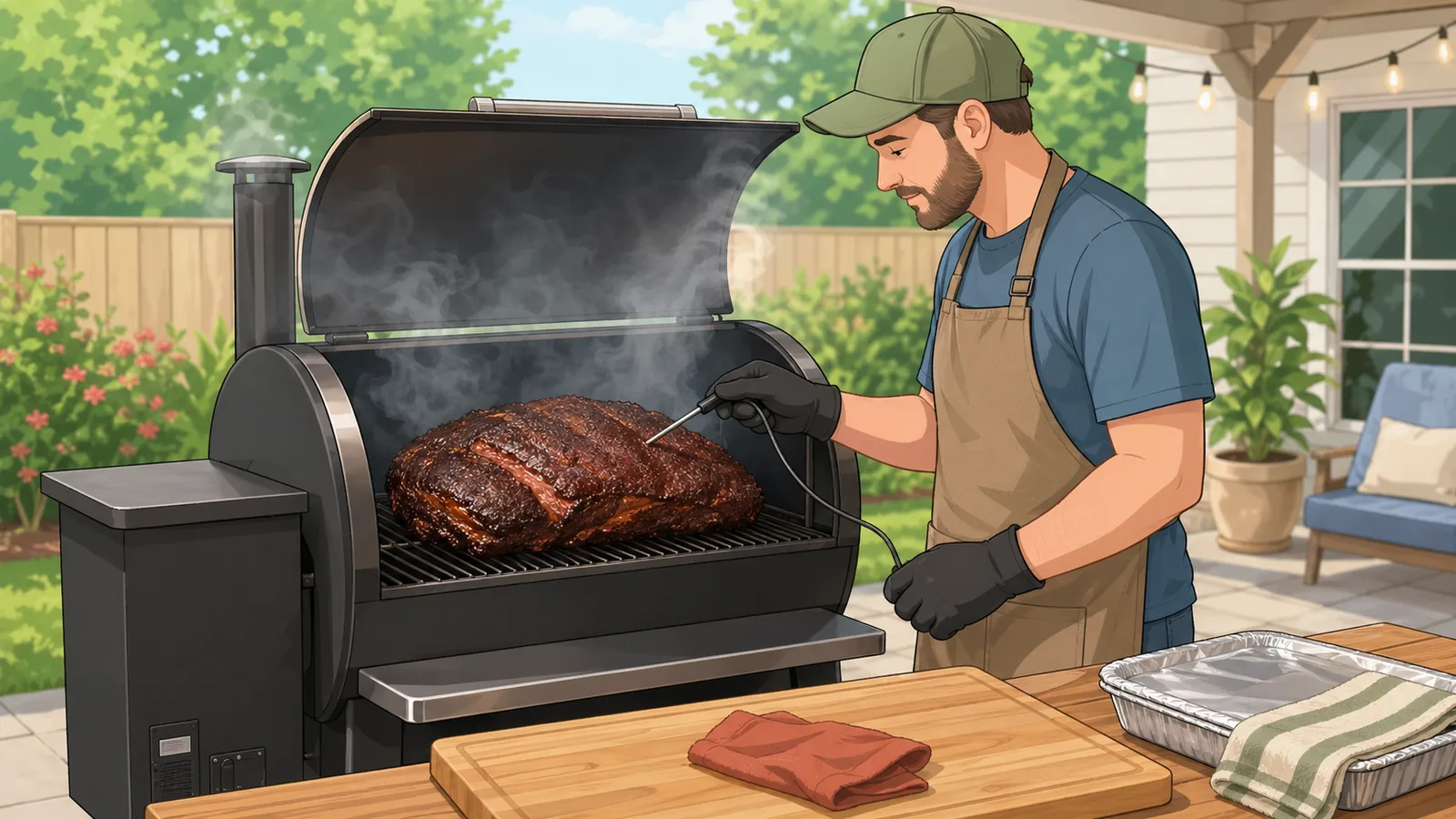
Meat Smoking Time Calculator instructional illustration

Meat Smoking Time Calculator

Plan when smoked meat should go on, when the stall may matter, and when to rest, buffer, hold, and serve from cut, weight, pit temperature, wrap style.

Last updated

Meat type

Region and temperature

Region sets the default smoker and internal temperature scale from your inferred locale. Override it here when a recipe or probe uses the other scale.

Temperature

Common pit temperatures

Target presets

Wrap strategy

Starting temperature

Rest presets

Schedule buffer presets

Result

12 hr to 16 hr 10 min

Whole brisket at 12 lb should land around 12 hr to 16 hr 10 min at 250F / 121C, with serving planned for 18:00.

Start window
23:50 to 04:00
Safe minimum
145F / 63C
Target finish
203F / 95C
Rest guidance
45-90 min
Schedule buffer
60 min

Plan summary

Wrap call

Butcher paper

Butcher paper is treated as a stall-management step, not a mandatory rule.

Stall guidance

Buffer required

A stall is likely for this cut and size, so build real buffer around the midpoint.

Buffer plan

Hold margin included

Schedule buffer is 60 minutes before the planned rest so a stall, weather, or hold does not immediately push dinner late.

Serving schedule

StepTimeWhy it matters
Preheat smoker23:20 to 03:30Give the pit about 30 minutes to stabilize near 250F before the meat goes on.
Meat goes on23:50 to 04:00This is the main loading window if you want to serve around 18:00 after a 60-minute rest.
Paper wrap step7 hr 45 min to 9 hr 35 min inIf bark and color look right, wrapping around 160F to 170F internal usually speeds the finish.
Buffer or hold1 hr reservedUse this margin for stall overruns, pit recovery, weather, or a wrapped hold if the meat finishes before the planned rest.
Pull and rest17:00Pull at about 203F / 95C, then rest for 60 minutes.
Slice, shred, or serve18:00Serving is planned for 18:00, with the smoking window kept broad enough to absorb common stall and carryover variation.

Quick reference for this cut

Pit tempEstimated rangeUse case
225F / 107C13 hr 20 min to 18 hr 30 minLower / slower
250F / 121C12 hr to 16 hr 10 minCurrent setting
275F / 135C10 hr 40 min to 14 hr 30 minHotter / faster

Interpretation notes

Brisket is a classic stall-prone low-and-slow cut. Expect bark, collagen breakdown, and tenderness to matter more than a precise per-pound clock.
Estimated around 70.42 minutes per pound at 250F once the meat profile, target temperature, and wrap choice are applied.
Use 45 min to 1 hr 30 min as the normal rest range for whole brisket.
This plan reserves 1 hr of schedule buffer for stalls, cold weather, wind, pit recovery, or an early finish that needs a safe hold.

Why the range is wide

Estimate = weight-based smoking profile x smoker-temperature adjustment x target-temperature adjustment x wrap/start-state modifiers.

Planned rest is 60 minutes. Normal rest guidance for this cut is 45 to 90 minutes.

Schedule buffer is 60 minutes before the planned rest so a stall, weather, or hold does not immediately push dinner late.

Smoking time depends on pit stability, airflow, trim, meat thickness, weather, grate placement, and stall behavior. Treat the range as a planning window, not a guarantee.

Current plan: Whole brisket at 12 lb / 5.44 kg, 250F / 121C smoker, 203F / 95C target.

Use a thermometer, not just the clock

Time is a planning estimate only. Probe the meat and finish by tenderness and safe internal temperature, not the clock alone.

A stall is likely around 160F to 170F internal. Build schedule buffer instead of assuming the midpoint is exact.

← All Ingredients & Conversions calculators

Cooking Planner

Meat smoking time calculator: smoking schedule, wrap timing, and rest planning

A meat smoking time calculator helps you turn a rough barbecue idea into a realistic serving plan before the smoker is even hot. This version estimates a smoking window from cut, weight, pit temperature, target internal temperature, wrap choice, and rest time, then works backward from your serve time so you can plan around the stall instead of letting the stall plan for you.

How the smoking-time estimate works

Smoking times are never a single universal truth because barbecue depends on cut shape, fat content, trim, airflow, pit stability, and how the meat behaves during the stall. A practical calculator therefore works best as a planning model rather than a promise. This page starts with a cut-specific time-per-pound profile, adds a small fixed setup allowance for the early smoke stage, then adjusts the estimate for smoker temperature, target internal temperature, wrap choice, and whether the meat starts fridge-cold or closer to tempered.

That structure mirrors how cooks actually plan barbecue. A brisket or pork shoulder at 225°F usually behaves like a long all-day cook, while salmon or poultry behaves more like an early-check window. Higher smoker temperatures often shorten the finish, but they also change bark development and moisture loss, so the calculator treats hotter pits as a time modifier rather than a free shortcut without tradeoffs. The result is intentionally a range because the best smoking planner tells you when to start, when to build buffer, and when to begin probing instead of pretending a single minute count can survive real-world stall behavior.

Estimated smoking time ~= weight-based cut profile x smoker-temperature adjustment x target-temperature adjustment x wrap/start modifiers

Planning heuristic that converts a cut-specific baseline into a realistic smoking window rather than a single stopwatch value.

Serve plan start window = serve time - rest time - estimated finish range

Works backward from the meal instead of forcing the cook to guess when a stall-prone cut will finally finish.
Why smoker temperature changes the schedule but does not replace the thermometer

Pit temperature is one of the biggest timeline drivers because low-and-slow barbecue spends hours transferring gentle heat into dense muscle and connective tissue. A brisket at 225°F will usually run materially longer than the same trimmed brisket at 275°F, but the hotter cook may also push the bark faster and narrow the window before the exterior is darker than you want. That is why smoking guides talk about both time and feel. The calculator reflects that by shortening or lengthening the estimate when you change the smoker temperature, while keeping the finish range broad enough to absorb real-world stall variation.

The internal thermometer still matters more than the clock. USDA and FoodSafety.gov publish the safe minimum temperature rules for poultry, fish, ground meats, and whole cuts because colour and smoke ring are not dependable proof of doneness. Even for long barbecue cuts that usually finish well above the safe minimum for tenderness, the right workflow is the same: use time to know when to start checking, then use temperature and tenderness to decide when the meat is actually ready.

Further reading

Wrap timing, the stall, and why some cuts need schedule buffer

The stall is the moment many long smokes stop behaving like a simple per-pound equation. As the surface moisture evaporates, the meat can sit in the same general internal-temperature zone for far longer than expected, especially with brisket, pork shoulder, and large beef ribs. That is why popular smoking calculators and pitmaster guides all end up discussing wrap timing, serving buffers, or both. Wrapping in butcher paper or foil does not magically fix a cook, but it often changes the shape of the final timeline by reducing evaporative cooling once the bark is where you want it.

Not every cut wants the same treatment. Brisket and pork shoulder are common wrap candidates, pork ribs often use wrap as a tenderness choice rather than a necessity, and poultry or salmon usually does not need a stall-management wrap at all. The calculator therefore treats wrap as a cut-sensitive modifier. For long red-meat cooks it can narrow the final window and surface a likely wrap stage; for leaner or faster-cooking cuts it falls back to a no-wrap assumption because the bigger risk is overshooting the finish, not surviving a stall.

  • Use no-wrap when bark is the priority and you can tolerate a broader finish window.
  • Use butcher paper when you want some stall help without steaming the bark as aggressively as foil.
  • Use foil when schedule control matters more than maximum bark texture.
  • Do not force a wrap strategy onto poultry or fish just because a brisket workflow uses one.

How much schedule buffer to add before dinner

A smoking time calculator is most useful when it separates estimated cook time from the real serving plan. The new schedule-buffer control reserves time before the planned rest so a slow stall, windy weather, pit recovery after opening the lid, or an early finish does not immediately push dinner late. For brisket, pork shoulder, and beef ribs, a buffer of 60 to 120 minutes is often more practical than trying to start at the latest possible minute.

Think of the buffer as flexible holding time, not as extra cooking time. If the meat finishes inside the normal range, the buffer becomes a wrapped hold or a calmer rest before slicing. If the cook runs long, the buffer absorbs the delay before guests are waiting. Faster cuts such as salmon, turkey breast, or whole chicken usually need much less buffer because the finish window is shorter and overshooting the target temperature is the bigger risk.

Worked example: planning a 12 lb brisket for dinner

Suppose you are smoking a 12 lb brisket at 250°F with a butcher-paper wrap strategy and you want to serve at 6:00 PM after a 60-minute rest. A realistic calculator does not tell you to start at one exact minute and hope for the best. It gives you a broad smoking window, a likely wrap period around the stall, and a pull-and-rest target that lets you hit dinner even if the brisket slows down in the afternoon.

That is the real value of a smoking planner. The range helps you decide whether you can sleep in, whether you need overnight smoke time, and whether a hotter pit or a foil finish is worth the bark tradeoff. It also forces the rest into the schedule. Many barbecue cooks only think about the smoking stage, then realize too late that a proper rest is part of the timeline, not a bonus step after the hard work is done.

What this calculator does not guarantee

No smoking-time calculator can know your exact pit behavior, wind, grate position, trim style, or how often you open the lid. Those variables are large enough to move a long cook by hours, which is why published BBQ charts are usually phrased as approximate times rather than exact promises. This tool is designed to reduce bad planning, not eliminate judgment. If your bark sets faster, your pit runs hot, or your brisket is unusually thick for its weight, the real finish point can still move.

The same limitation applies to target temperatures. A number such as 203°F is a useful tenderness checkpoint for many briskets and pork shoulders, but the meat is ready only when the probe slides in with the right feel and the carryover plan still matches your service window. Treat this page the same way experienced pitmasters treat a timeline written on a butcher-paper roll: as disciplined structure for the cook, not as a substitute for paying attention.

Further reading

Frequently asked questions

How long does it take to smoke meat per pound?

There is no single universal per-pound number because brisket, pork shoulder, ribs, poultry, and fish all behave differently. Large collagen-heavy cuts often run roughly in the neighborhood of a long all-day cook at 225°F to 250°F, while poultry and fish finish much faster. A good calculator therefore starts from a cut profile and gives you a range instead of pretending every smoker and every stall behaves the same way.

What temperature should I smoke brisket or pork shoulder at?

Many backyard barbecue plans live in the 225°F to 275°F range because that is where low-and-slow bark development and tenderness work well for brisket and pork shoulder. Lower temperatures usually widen the finish window, while hotter temperatures can shorten the schedule but may change bark and moisture loss. The right move depends on whether your priority is pit stability, bark texture, or hitting a meal deadline.

Why does a smoking calculator use a range instead of one exact finish time?

Because barbecue is not an exact stopwatch process. Meat thickness, fat content, trim, weather, airflow, wrap choice, probe placement, and the stall can all move the finish point. A range is more useful than false precision because it gives you a real start window and a real serving buffer.

When should I wrap brisket or pork shoulder?

Wrapping usually becomes relevant when bark colour looks right and the meat has entered the common stall zone, often somewhere around the mid-160s Fahrenheit internal. But that is a planning zone, not a compulsory law. If the bark is not set, wrapping early can cost texture; if the bark is already dark enough and dinner matters more, wrapping can help tighten the schedule.

Does foil make smoked meat cook faster than butcher paper?

Usually yes, at least as a planning heuristic. Foil traps more steam and tends to push a stalled cook through faster than paper, but it also softens bark more aggressively. Butcher paper is often chosen when the goal is some stall relief without giving up as much bark texture.

How long should smoked meat rest before slicing or pulling?

Rest time depends on the cut. Fish and quick poultry smokes may need only a short pause, while brisket and pork shoulder often benefit from a much longer hold so juices settle and the texture stabilizes. The important planning point is that rest belongs inside the schedule, not after it. If dinner is at 6:00 PM and the meat needs a 60-minute rest, the smoker timeline has to end by 5:00 PM, not by 6:00 PM.

How much buffer should I add to a meat smoking schedule?

For large stall-prone cuts such as brisket, pork shoulder, and beef ribs, 60 to 120 minutes of schedule buffer is often sensible when dinner time matters. That buffer is not extra cook time; it is time reserved for a slower stall, cold or windy weather, pit recovery, or a wrapped hold if the meat finishes early. Small poultry, fish, and quick smokes usually need less buffer because they can overshoot the target temperature faster.

How do I know smoked meat is actually done?

Use the clock to know when to start checking, then finish with a thermometer and tenderness checks. Poultry and fish must satisfy the official safe minimum temperature rules. Long barbecue cuts such as brisket and pork shoulder are often taken higher for tenderness, but they are still done only when the probe feel, bark, and carryover plan agree with each other.

Why can the stall add so much time to a smoke?

The stall happens because evaporation from the meat surface cools the cook in the same way sweat cools skin. That evaporative cooling can flatten internal-temperature progress for a long period even while the smoker is steady. It is one of the main reasons large smoking cuts frequently finish later than a neat per-pound shortcut would suggest.

Do I need a different target temperature for chicken or turkey than for brisket?

Yes. Poultry is governed by a much higher official safe minimum temperature than whole cuts of beef or pork, while brisket and pulled-pork cuts are usually taken far above the safe minimum because collagen breakdown and tenderness happen later. A smoking planner should therefore keep poultry targets and brisket-style tenderness targets separate instead of treating them as one BBQ number.

Can I trust a smoker time chart without using a thermometer?

No. Time charts are useful for planning, but smoke colour, bark, and time per pound are not enough to prove safe doneness. USDA guidance explicitly emphasizes thermometer-based verification because visual cues alone can mislead, especially with smoked poultry, cured meats, and any cut where the smoke ring or exterior colour looks convincing before the centre is ready.

Also in Ingredients & Conversions

You may also need

Related

More from nearby categories

These related calculators come from the same leaf category, nearby sibling categories, or the same top-level topic.