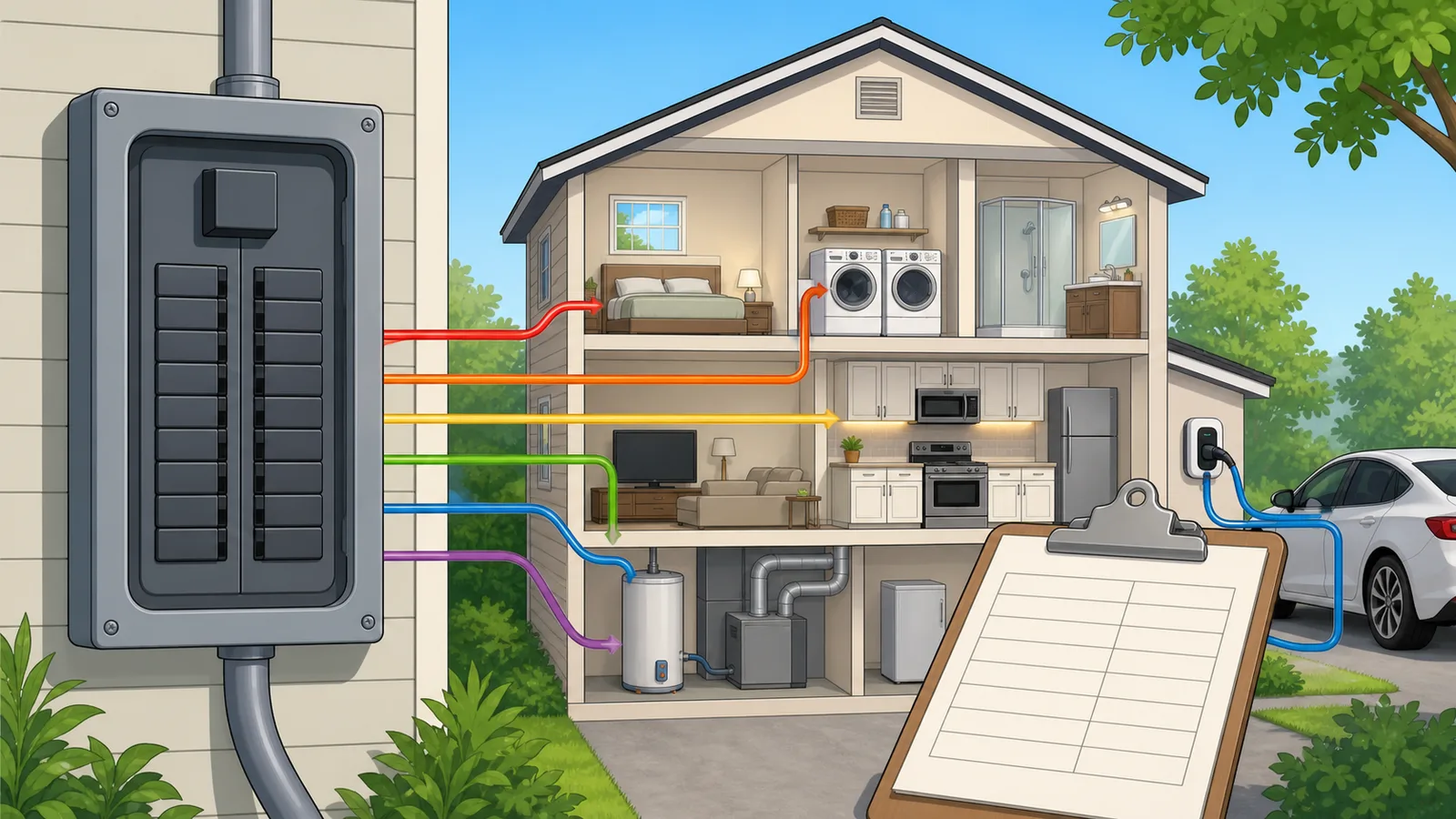
What is the difference between connected load and calculated load?
Connected load is the raw total of the loads you list on the worksheet. Calculated load is the diversified demand after the dwelling-demand treatment is applied. Residential panel planning usually cares more about calculated load than connected load because not every load is expected to operate at full nameplate at the same time.
Why does the calculator use 3 VA per square foot?
That allowance is part of the standard residential worksheet approach for general lighting load. It gives the dwelling a baseline lighting and receptacle allowance tied to floor area before the required small-appliance and laundry circuits are added.
Why does only the larger of heating or cooling count?
Residential load worksheets typically treat heating and cooling as non-coincident loads. In plain terms, the dwelling is usually designed around the larger seasonal HVAC demand rather than summing both systems at full load at the same time.
Can I use this as a residential electrical load calculator for a panel upgrade?
Yes, that is one of the main uses. The output helps you estimate whether an existing service still has room for remodel loads, an EV charger, or a workshop. It is still a planning result, so final upgrade decisions should be checked against the applicable code method and the local permit worksheet.
Does this calculator follow the NEC optional method?
It follows NEC-style optional dwelling logic rather than pretending to cover every Article 220 workflow. The new or whole-dwelling mode uses a 10,000 VA plus 40% pattern in the style of 220.82, and the existing-dwelling mode uses an 8,000 VA plus 40% adequacy pattern in the style of 220.83.
Why is the dryer load forced to at least 5,000 VA?
Residential worksheets often use a 5,000 VA floor for electric dryer treatment unless the nameplate is higher. This keeps very low entered numbers from understating a dryer's contribution to the dwelling calculation.
How should I enter an EV charger load?
Enter the charger's volt-amp load as an added load so it stays visible in the breakdown. For a 40A charger on a 240V circuit, 9,600 VA is a common starting figure because 240 x 40 = 9,600. If the actual equipment rating differs, use the real nameplate or design load instead of the default preset.
Does this replace a permit worksheet from my city or utility?
No. City and utility worksheets can have jurisdiction-specific assumptions, formatting requirements, or local amendments. This page is meant to prepare you for that process by organizing the major dwelling-load inputs and showing the impact on service headroom.
What service size is enough for a house: 100A, 125A, 150A, or 200A?
There is no universal answer because the right service size depends on the dwelling area, cooking and dryer assumptions, HVAC, appliance count, EV charging, and any planned additions. The calculator helps by translating those inputs into demand amps and then recommending the next common panel size when the current service is not enough.
What does the watch-capacity status mean?
It means the worksheet still fits inside the entered service but with limited headroom. That is the zone where future electrification plans, conservatively entered loads, or local interpretation of the worksheet can push the project from 'probably fine' into 'needs upgrade review,' so it is worth treating the result as a prompt for a more formal check.
How do I use this when calculating electrical load for a house with future EV charging or electrification plans?
Enter the current dwelling worksheet first, then use the future-upgrade comparison to add planned EV charging, heat-pump, induction-cooking, or other project loads without overwriting the current case. That lets you compare today's service headroom against a realistic future plan before deciding whether a service upgrade discussion should happen now.
Is an electrical panel load calculator the same thing as a house energy-usage calculator?
No. A house energy-usage calculator estimates consumption over time, usually in kWh, while a residential electrical load calculator estimates service demand in volt-amperes and amps. The first helps with utility-bill or efficiency questions. The second helps with panel size, service-load, and upgrade-planning questions.
Why can a 100A service look fine today but fail once a future load is added?
Because service planning is about headroom, not just today's worksheet total. A house that already uses most of a 100A service can cross into overload risk when a large future project such as a Level 2 EV charger or new electric appliance is added. That is why the comparison view matters: it shows whether the current service is only barely adequate or still has enough space for the next project.
What if the electrical panel load calculation says an EV charger will not fit?
Treat that as a planning flag rather than a final installation answer. Common next steps include checking the actual charger amperage, considering a smaller EV charging circuit, reviewing whether a listed load-management device is acceptable locally, or planning a service upgrade. The calculator shows the headroom problem so those options can be discussed before equipment is purchased or a permit application is started.
Is panel space the same thing as electrical load capacity?
No. Panel space is about whether there are physical breaker positions and approved breaker configurations available. Electrical load capacity is about whether the service and panel rating can support the calculated demand. A panel can have open spaces and still be too small by load calculation, or it can have enough electrical capacity but need panel work to create a compliant breaker layout.