Solve centripetal force, mass, velocity, or radius for circular motion from linear speed, angular speed, RPM, or period, with acceleration, g-force.
Last updated
Solve the circular-motion value you are missing Use the centripetal force formula with linear speed, angular speed, period, or RPM. The result also shows
centripetal acceleration, g-force, and how a speed or radius change affects the inward force requirement.
Solve for
Speed basis
Choose how circular speed is known before entering dependent values. When solving velocity, the calculator derives the speed from force, mass, and radius.
Examples
Scenario check
Adjust speed or radius to see the square-law effect before relying on one number.
Circular motion result
250 N
Solved centripetal force from F = mv² / r.
Force
250 N
Mass
5 kg
Velocity
10 m/s
Radius
2 m
Centripetal acceleration
50 m/s²
Equivalent acceleration
5.1 g
Angular velocity
5 rad/s
Rotation rate
47.75 RPM
Period: 1.26 s/rev
Scenario force
360 N
With speed × 1.2 and radius × 1, force changes by 44%.
High circular acceleration
The inward acceleration is high. Treat this as a planning result and check the real force source, attachment, friction, or structural limit before relying on it.
Higher speed raises force with the square of velocity, so doubling speed quadruples the
centripetal force when mass and radius stay fixed. A larger turning radius reduces the
force needed to keep the same object in circular motion.
Centripetal force calculator: solve force, mass, velocity, or radius for circular motion
A centripetal force calculator helps you solve the circular-motion relationship F = mv² / r in the direction you actually need. Instead of only returning force, this version can also solve for mass, velocity, or radius, then show the matching centripetal acceleration, angular velocity, RPM, period, and g-force context so the result is easier to interpret in real turning-motion problems.
What centripetal force is actually describing
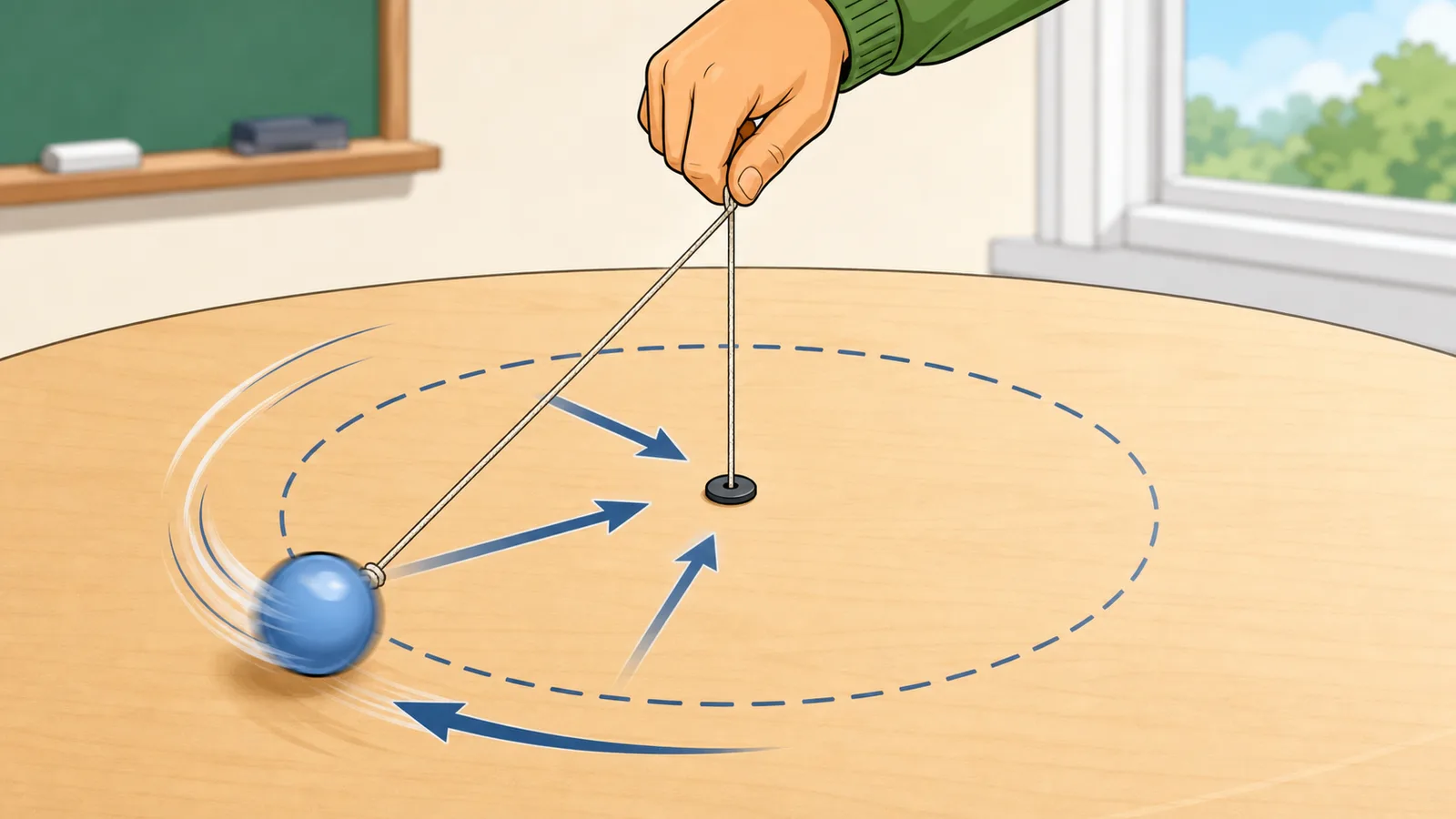
Centripetal force is not a separate kind of force in the way weight or tension is. It is the inward net force required to keep an object moving in a circular path. That inward force can come from tension, gravity, friction, the normal force, or a combination of forces depending on the situation.
The important idea is direction: the required force always points toward the center of the circle. Without that inward force, the object would continue in a straight-line path rather than curve around the circle.
How the centripetal-force formula works
The circular-motion relationship is F = mv² / r. Mass increases the force requirement directly, radius reduces it, and velocity has the strongest effect because it is squared. That means even a modest speed increase can produce a large increase in the force required to maintain the same turn radius.
This is why solve-for mode matters. In some problems you know the turning radius and speed and need the force. In others you know the safe force limit and want the largest possible radius or the speed that stays within that force. The same formula supports all of those workflows.
F = mv² / r
Core centripetal-force relationship for uniform circular motion.
a_c = v² / r
Centripetal acceleration derived from the same circular-motion setup.
ω = v / r
Angular velocity for the same motion when linear speed and radius are known.
F = mω²r
Equivalent centripetal-force formula when angular speed is known instead of linear speed.
ω = 2π/T
Angular speed from period, where T is the time for one complete revolution.
Using angular speed, RPM, or period instead of linear velocity
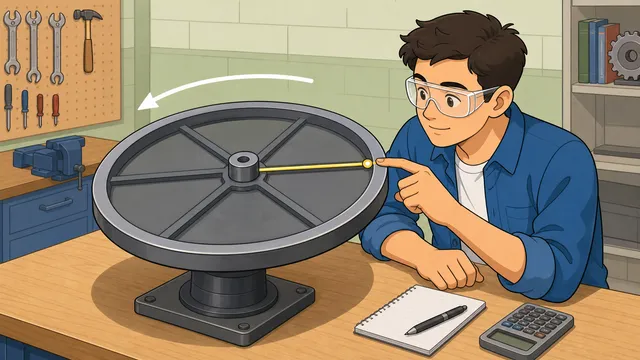
Many circular-motion problems do not start with tangential velocity. A rotor, turntable, motor shaft, or laboratory spinner may be described by angular speed, revolutions per minute, or period. The calculator converts those values into the same circular-motion model before applying the centripetal force formula.
If angular speed is known, the equivalent formula is F = mω²r. If period is known, use ω = 2π/T first. If RPM is known, divide by 60 to get revolutions per second and then multiply by 2π. Keeping these paths visible helps avoid the common mistake of treating RPM as radians per second.
Scenario checks for speed, radius, and force limits
The scenario check shows what happens when speed or radius changes while mass stays fixed. Because force follows velocity squared, a 20% speed increase raises the required inward force by 44% if the radius is unchanged. A larger radius reduces the force requirement for the same linear speed, but it raises the force requirement if angular speed is held constant instead.
That distinction is useful in vehicle turns, rotating machinery, amusement rides, and classroom physics problems. A force limit can become a maximum speed question, a minimum-radius question, or a mass-limit question depending on which variable you can actually change.
Interpreting centripetal acceleration and g-force
Centripetal acceleration is the inward acceleration that changes direction even when speed stays constant. Reporting it in m/s² and as a multiple of standard gravity gives the result a practical scale. A value of 0.5 g is a much different scenario from 5 g even if both come from the same formula.
The g-force comparison is still only a simplified acceleration comparison. The exact sensation, load path, or safety margin depends on the real system: friction for a car, tension for a string, gravity for an orbit, or the normal force for a ride or banked curve.
Worked example
Suppose a 5 kg object moves at 10 m/s around a 2 m radius circle. The required centripetal force is 5 × 10² / 2 = 250 N. The matching centripetal acceleration is 10² / 2 = 50 m/s², and the angular velocity is 10 / 2 = 5 rad/s.
Now reverse the question. If the force limit is 250 N, the mass is 5 kg, and the radius is 2 m, the maximum speed is √(Fr / m) = √(250 × 2 / 5) = 10 m/s. That is why the same page is useful as both a direct force calculator and a circular-motion constraint solver.
What this calculator does not cover
This page assumes uniform circular motion. It does not model changing speed around the path, tangential acceleration during spin-up or braking, or full dynamics where multiple forces need to be resolved component by component.
It is also a scalar solver. It gives the magnitude of the inward force required for circular motion, but it does not draw free-body diagrams or determine which specific real-world force provides that inward component in a more complex system.
Usually no. It is the inward net force needed for circular motion. Depending on the situation, that inward force may be supplied by gravity, friction, tension, the normal force, or another real force.
Why does speed affect centripetal force so strongly?
Because velocity is squared in F = mv² / r. If speed doubles while mass and radius stay the same, the required centripetal force becomes four times larger.
Can this calculator solve for speed instead of force?
Yes. This page supports solve-for modes for force, mass, velocity, and radius so you can rearrange the same relationship without doing the algebra manually.
Does this work for non-uniform circular motion?
Only partly. The centripetal-force magnitude still describes the inward component required for curvature, but non-uniform motion also introduces tangential acceleration and may need a fuller dynamics treatment.
Can I calculate centripetal force from RPM?
Yes. Convert RPM to angular speed first: ω = RPM × 2π / 60. Then use F = mω²r. The calculator does this conversion when you choose RPM as the speed basis.
What is the formula for centripetal acceleration?
The most common formula is a_c = v² / r. If angular speed is known, use a_c = ω²r. Centripetal force is then mass times that inward acceleration.
How do I find radius from centripetal force?
If linear speed is known, rearrange F = mv² / r to r = mv² / F. If angular speed is known, use F = mω²r instead, so r = F / (mω²).
What real force provides centripetal force?
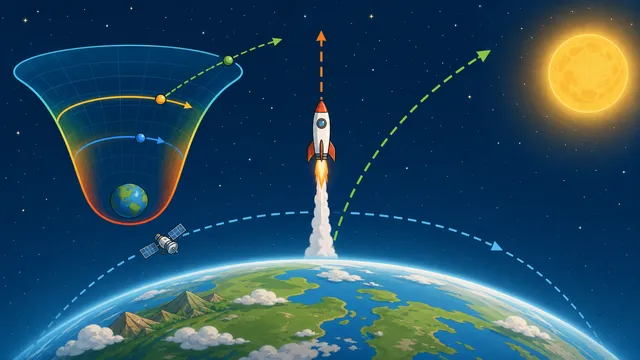
It depends on the system. Tension can provide it for a swinging object, friction for a vehicle turn, gravity for an orbit, and the normal force for some banked or ride motions. The calculator finds the inward requirement, not the detailed force source.
Is centripetal force the same as centrifugal force?
No. Centripetal force is the inward net force required for circular motion in an inertial frame. Centrifugal force is the apparent outward effect described in a rotating frame.