Skip to content
Calcipedia
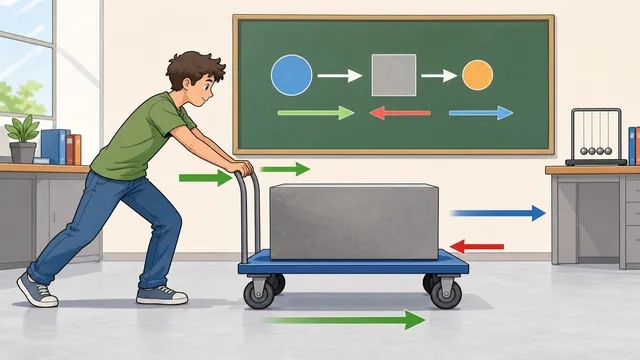
Impact Force Calculator instructional illustration

Impact Force Calculator

Calculate average impact force for crashes, dropped objects, or falls from mass, speed, or drop height using stopping distance or stopping time, with g-force.

Last updated

Calculation method

Scenario presets

Quickly compare a short crash stop, a longer restraint-assisted stop, and a time-based estimate.

Impact speed source

How to interpret the result

This calculator returns average force, not peak force. The sensitivity table is the key part: it shows how much the average force falls when the same stop is spread across more time or more distance.

Average impact force

14.468 kN

Average force for a 75 kg object slowing from 13.89 m/s to 0 m/s by the selected stopping distance method.

Force (N)
14,468
G-force
19.67
Kinetic energy
7,234 J
Average deceleration
192.9 m/s²

Impact breakdown

Velocity change13.89 m/s
Stopping distance0.5 m
Selected methodStopping distance

Sensitivity comparison

These rows keep the same mass and velocity change while changing only the stopping distance or time.

ScenarioStopping distanceAverage force
Half the stopping distance0.25 m28.935 kN
Current stopping distance0.5 m14.468 kN
Double the stopping distance1 m7.234 kN
Average force is not peak force Real impacts rarely decelerate at a perfectly constant rate. This calculator is best for comparing scenarios and showing why increasing stopping distance or stopping time matters so much.
← All Physics calculators

Science — Physics

Impact force calculator guide: stopping distance, stopping time, and g-force

An impact force calculator estimates the average force created when a moving object comes to rest over a stopping distance or stopping time. It is useful when people search impact force calculator, crash force, fall impact force, or g-force from stopping distance. The useful part is not only the large force number, but understanding why average force changes dramatically when the same motion is stopped more gradually.

The distance method uses the work-energy theorem

If you know how far the object travels while stopping, the work-energy theorem gives the average force. The basic idea is that the moving object's kinetic energy has to be dissipated across the stopping distance. The shorter that distance is, the larger the average force must be.

That is why protective systems such as crumple zones, foam, suspension, airbags, helmets, and mats are built to increase stopping distance. They do not erase the energy. They spread the same energy transfer over more distance so the average force comes down.

Average force = change in kinetic energy ÷ stopping distance

Distance-based method for estimating average impact force from energy dissipation.

Kinetic energy = 0.5 x mass x velocity^2

Energy that must be absorbed as the moving object is brought to rest.

The time method uses impulse and momentum

If you know how long the stop takes, the calculator can estimate average force from impulse instead. In that view, force depends on how quickly momentum changes. The same object and speed produce a larger average force when the stop happens in a shorter time.

This is the version many people have in mind when they ask about crash force or fall force from deceleration time. It is also why impact-force pages often rank for both stopping time and g-force phrasing rather than only for physics textbook vocabulary.

Average force = mass x change in velocity ÷ stopping time

Impulse-momentum form used when the duration of the stop is known.

The fall-height mode converts a drop into impact speed

For falling-object questions, users often know the drop height more easily than the impact speed. The calculator now handles that case by estimating the impact speed from free fall near Earth's surface, then using the same stopping-distance or stopping-time force method.

This is useful for quick dropped-object and fall impact force estimates, but it comes with an important assumption: the object starts from rest and air resistance is ignored. For very light, wide, or wind-affected objects, the real impact speed can be lower than the simple free-fall estimate.

Impact speed from drop height = sqrt(2 x g x height)

Free-fall estimate used when the object starts from rest and air resistance is ignored.

Further reading

  • OpenStax — Free Fall — Open physics reference covering free-fall motion and constant gravitational acceleration near Earth's surface.

Why average force and peak force are not the same

This calculator returns an average force over the full stopping event. Real impacts rarely produce a perfectly flat force curve. Force usually rises and falls over time, which means the peak can be much higher than the average. That distinction matters in engineering because injury risk and material failure often depend more on peak loading than on the average value alone.

For that reason, the result is best used as a first-pass estimate. It can compare scenarios and show the importance of longer stopping time or distance, but it is not a substitute for crash testing, instrumented drop testing, or detailed structural analysis.

G-force is another way to express the same deceleration

G-force turns the deceleration into a multiple of standard gravity. This is often easier to picture than a large force in newtons because it describes how severe the deceleration feels relative to normal Earth gravity. The calculator therefore helps bridge the gap between raw physics and practical questions such as how hard a crash, tackle, or fall really is.

Even so, no single g-force number predicts injury by itself. Direction of loading, body position, restraint systems, contact area, repeated exposure, and the exact force-time curve all matter.

Further reading

Worked example: why doubling the stopping distance cuts average force

Suppose a moving object has the same mass and the same incoming speed in two different scenarios. In the first, it stops over 0.5 m. In the second, it stops over 1.0 m. The kinetic energy that must be dissipated is the same in both cases, so doubling the stopping distance roughly halves the average force.

That is the most useful takeaway from this page. Users often care less about the exact force number than about how much safer a longer stop could be. The sensitivity table on the live calculator is there to make that comparison immediate.

Seat belts, airbags, and crumple zones spread the stop

The same physics explains why seat belts, airbags, padding, and crumple zones help in a crash. They do not remove the kinetic energy. Instead, they increase the time and distance over which the energy is absorbed, which lowers the average force. That is why the same collision can look dramatically different when the stop is stretched out by restraint systems or deformation.

This is also the reason impact-force questions often appear alongside car crash force, seat belt, and g-force searches. People are usually trying to compare a hard stop with a more forgiving one, not just solve a textbook equation.

Further reading

Worked example: the same crash, one longer stop

Take a 70 kg person moving at 30 km/h. If the stop happens over about 4 cm, the average force is on the order of 61 kN. If the same stop is spread over about 20 cm, the average force falls to about 12 kN. The mass and speed did not change — only the stopping distance did.

That example is intentionally simple. It does not model peak loading, vehicle crush structure, or the exact force-time curve, but it makes the main design lesson obvious: the stop length is a huge part of the result.

When to use stopping distance versus stopping time

Use stopping distance when you know how much room the object had to slow down, such as a crumple zone, a mat, padding, or a drop that ends on a surface with known deformation. Use stopping time when you have measured or estimated how long the deceleration lasted, such as from test data, crash data, or a timed event.

Both methods estimate average force, but they answer slightly different practical questions. Distance is often easier to picture for dropped objects and cushioning systems, while time is often more direct for collision logs, motion analysis, and any scenario where the duration is known more reliably than the deformation distance.

Frequently asked questions

Why does a longer stopping distance reduce force?

Force equals the change in kinetic energy divided by stopping distance. Doubling the stopping distance halves the average force. This is why crumple zones in cars, foam padding in helmets, and gymnastics mats all work by increasing the distance over which kinetic energy is absorbed.

What is the difference between average and peak impact force?

This calculator gives the average force over the entire stopping distance or time. Real impacts involve complex force curves; peak force can be several times the average. Detailed crash analysis requires finite-element simulation or instrumented testing.

Why does a longer stopping time reduce force?

Because the same change in momentum is being spread over more time. If mass and velocity change stay the same, doubling the stopping time halves the average force in the impulse-momentum view.

Can this calculator predict injury risk?

No. It provides a physics estimate of average force and related deceleration, not a medical or biomechanical injury prediction. Human injury risk depends on many additional factors, including body position, contact area, restraint systems, repetition, and the peak force profile.

How does crumple zone length affect impact force in a car crash?

A longer crumple zone increases the stopping distance, which directly reduces the average impact force on the occupants. This is the fundamental principle behind modern vehicle safety design. For example, doubling the crumple distance halves the average force. This calculator demonstrates the same relationship — enter a longer stopping distance and the force decreases proportionally.

Should I use stopping distance or stopping time?

Use the method that matches the information you actually know. Distance is usually better when you know how much a mat, crumple zone, or other surface deformation can absorb. Time is usually better when you have a measured collision duration or a test result, because the calculator can convert that duration directly into an average force.

What does the g-force number mean?

The g-force result shows the average deceleration as a multiple of Earth's gravity. It is useful for comparison because it turns a large deceleration into a familiar scale, but it is still only a rough indicator. Direction of loading, body position, peak force, and the force-time curve all affect the real-world severity.

Can I enter a non-zero final velocity?

Yes. If the object rebounds or keeps moving after impact, enter the final velocity so the calculator uses the correct change in speed. That usually lowers the average force, but rebound impacts can be more complicated than a single clean stop, so the result is still an estimate rather than a full collision model.

Do seat belts and airbags reduce impact force?

Yes. They reduce average force by stretching out the deceleration over more time and distance. The same collision energy still has to go somewhere, but the restraint system and vehicle structure spread that energy over a longer stop so the force on the occupant is lower.

Is this average force or peak force?

This calculator returns average force. Real impacts rarely produce a perfectly flat force curve, so the peak force can be much higher than the number shown here. If you need the peak value for design or safety analysis, you need crash testing, instrumented measurements, or a more detailed engineering model.

Can I use this for a dropped object or a fall?

Yes, as a quick physics estimate. You can enter either a known impact speed or use the drop-height mode to estimate impact speed from free fall, then provide either the stopping distance or stopping time. That makes the calculator useful for a dropped tool, a falling package, or a padded landing, but it does not replace workplace risk assessment or formal safety controls.

How do I calculate impact force from drop height?

Use the drop-height input when the object starts from rest and air resistance is small enough to ignore. The calculator estimates impact speed from the free-fall relationship, then applies the selected stopping distance or stopping time. The shorter the stopping distance or time, the larger the average force.


Also in Physics

Related

More from nearby categories

These related calculators come from the same leaf category, nearby sibling categories, or the same top-level topic.