Calculate free-fall distance, time, velocity, and impact energy from rest using standard kinematics, then compare the same known input across Earth, Moon, Mars.
Last updated
Solve for
Gravity preset
What this model assumes
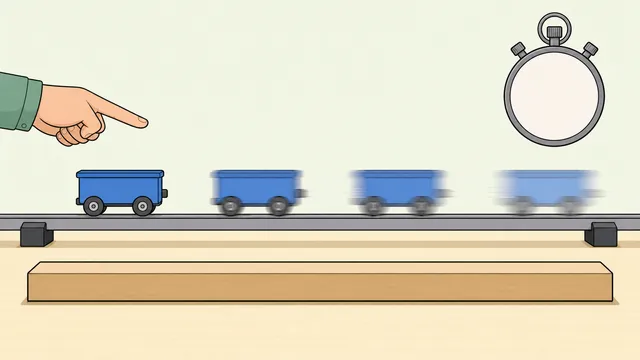
The calculator assumes the object starts from rest and falls under constant gravitational acceleration with no drag. That makes it useful for short textbook drops, quick drop-test checks, and planet-to-planet gravity comparisons.
Free-fall result
19.61 m
Using time as the known input, this scenario reaches 19.61 m,
lasts 2 s, and ends at 19.61 m/s.
Formula used
d = 1/2 × g × t²
Gravity used
9.81 m/s² (1× Earth gravity)
Specific impact energy
192.34 J/kg
Selected scenario sheet
Use elapsed time and gravitational acceleration to calculate free-fall distance from rest.
Distance
19.61 m
19.61 m
Time
2 s
2 s
Final velocity
19.61 m/s
19.61 m/s
Known input
Time
Earth preset active
Specific impact energy
192.34 J/kg
Add mass to estimate total impact energy
Same known input across gravity presets
These rows keep the same known input and only change the local gravity.
Body
Gravity
Distance
Time
Velocity
Earth
9.81 m/s²
19.61 m
2 s
19.61 m/s
Moon
1.62 m/s²
3.24 m
2 s
3.24 m/s
Mars
3.72 m/s²
7.44 m
2 s
7.44 m/s
Jupiter
24.79 m/s²
49.58 m
2 s
49.58 m/s
Selected-gravity checkpoints
Use these rows to sanity-check how fast the fall grows over time under the chosen gravity.
Elapsed time
Distance
Velocity
1 s
4.9 m
9.81 m/s
2 s
19.61 m
19.61 m/s
3 s
44.13 m
29.42 m/s
5 s
122.58 m
49.03 m/s
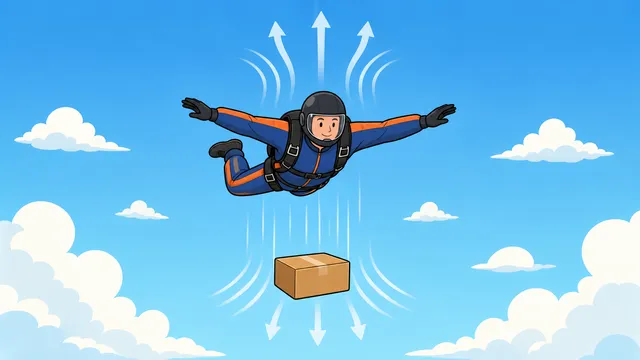
Where free-fall estimates stop being exact The classical free-fall model ignores drag, lift, and spin. For long drops or high-speed falls, air resistance pushes the real trajectory away from these textbook values and eventually caps the speed at terminal velocity.
Free fall describes the motion of an object under the sole influence of gravity, with no air resistance. This free fall calculator determines distance fallen, final velocity, and fall time using the standard kinematic equations, then compares the same known input across Earth, Moon, Mars, and Jupiter gravity and adds impact-energy context when you know the object's mass.
Kinematic equations for free fall
An object dropped from rest under constant gravitational acceleration g falls a distance d = ½gt² and reaches a velocity v = gt after time t. Combining these gives v² = 2gd, which relates velocity directly to distance without needing time. Standard gravity is g = 9.80665 m/s².
After 1 second, an object has fallen about 4.9 m and is travelling at 9.8 m/s. After 3 seconds, it has fallen roughly 44 m and is moving at about 29.4 m/s. These values assume no air resistance, so real-world falls at significant heights will differ due to drag.
d = ½ × g × t²
d is distance fallen, g is gravitational acceleration, and t is elapsed time from rest.
v = g × t
v is the velocity at time t for an object starting from rest.
v² = 2 × g × d
Relates velocity directly to fall distance, eliminating time from the equation.
Free fall on other planets
Gravitational acceleration varies across celestial bodies. On the Moon (g ≈ 1.62 m/s²), an object falls much more slowly — about 0.81 m in the first second compared to 4.9 m on Earth. On Jupiter (g ≈ 24.79 m/s²), objects fall roughly 2.5 times faster than on Earth. The calculator supports custom gravity values for any environment.
Further reading
NASA — Planetary Fact Sheet — Reference link used to support the surrounding explanation for nasa — planetary fact sheet.
Impact speed versus impact energy
Impact speed tells you how fast the object is moving when it reaches the end of the fall. Impact energy adds one more layer: how much kinetic energy the moving object carries. The calculator now reports specific impact energy in joules per kilogram for every scenario, and if you provide object mass it also estimates the total impact energy in joules.
That distinction matters because two objects can share the same impact speed but carry very different total energies if their masses differ. For example, a 2 kg object dropped 20 m on Earth reaches about 19.8 m/s and carries about 392 J of kinetic energy at impact, while the same fall for a 1 kg object would carry about half that.
This does not turn the page into a safety or materials-failure model, but it does make the result more useful for classroom interpretation, drop-test intuition, and comparisons between the same fall under different gravity assumptions.
Worked example: a 20 m drop on Earth
Suppose you know the drop height is 20 m and you want the fall time and impact speed on Earth. Using t = √(2d / g), the time comes out to about √(40 / 9.80665) ≈ 2.02 seconds. The matching impact speed from v = gt is about 19.8 m/s.
That same 20 m drop would take much longer on the Moon and much less time on Jupiter. This is why a comparison table is useful: it shows how strongly the same known distance or time changes once gravity changes, even though the equations stay the same.
In true free fall (no air resistance), all objects fall at the same rate regardless of mass. Galileo demonstrated this principle at the Tower of Pisa. In practice, air resistance causes lighter or less aerodynamic objects to fall more slowly, but the gravitational acceleration itself is mass-independent.
How accurate is the free fall model for real drops?
For short drops (under about 10 m) at low speeds, air resistance is negligible and the model is very accurate. For longer falls, drag becomes significant. A skydiver reaches terminal velocity at around 50–60 m/s, after which the free-fall equations no longer apply because the object is no longer accelerating.
How do I calculate free-fall time from a known height?
Use the distance form of the kinematics equation, t = √(2d / g), where d is the drop height and g is the gravitational acceleration. This gives the time from rest if air resistance is ignored. Once the time is known, you can also calculate impact speed with v = gt.
Which gravity value should I use for the Moon or Mars?
Use the gravity value for the body you want to model. The page includes preset checkpoints for Earth, Moon, Mars, and Jupiter, and you can also enter a custom gravity value if you need a different environment. That makes the result useful for classroom problems and other planet-specific scenarios.
Can I use this calculator when air resistance matters?
Not directly. This worksheet assumes free fall with no drag, so it works best for short drops and textbook problems. If air resistance is important, the object's motion will deviate from the simple kinematic equations and a more detailed drag model is needed.
What is specific impact energy in a free fall calculator?
Specific impact energy is the kinetic energy per kilogram at impact, measured in joules per kilogram. In free fall from rest it equals 1/2 v², so it gives you a mass-independent way to compare how severe the same fall is under different gravity values.
Why would I enter object mass if free-fall speed does not depend on mass?
Mass does not change the ideal free-fall acceleration in this model, so it does not change the time or final speed. But mass does change total kinetic energy at impact. Entering mass lets the calculator estimate impact energy in joules, which is more useful than speed alone for many classroom or drop-test comparisons.